


Menopause - We people with a uterus know that we have to go through it at some point, but we don't really want to think about it yet, do we? Menopause, that's a problem that affects our mothers. But did you know that you can start having menopausal symptoms as early as 40? And 40 is somehow the new 30, so not that far off, is it? So let's take a look at this time together. And even if you're already going through menopause, you might still be able to learn a thing or two and look at this important time with fresh eyes.
What is menopause?
During menopause, people with ovaries transition from their fertile years, when they can conceive children, to a time without a menstrual cycle. Genetically, this change is usually determined between the ages of 40 and 60, but can be influenced by various factors. The transition is largely caused by the ovaries, which gradually reduce and eventually cease their function. The cause is the number of eggs capable of maturing, which is determined at birth - when they run out, simply put, the ovaries also lose their function, a menstrual cycle is no longer necessary and, due to the lack of hormones, no longer possible. So it's all perfectly normal, but unfortunately still somehow stigmatized and very, very often associated with menopausal symptoms.
When does menopause begin?
On average, people with ovaries reach menopause at age 51. Before this occurs, they go through premenopause and perimenopause (menopause transition). How long pre- and perimenopause ultimately are varies. Generally, it is said that the ovaries begin to reduce their function around age 30 and that about 10 years before menopause there is a clearly measurable decline in the number of follicles and associated hormones [2]. By the way, it is also possible that you have menopause at 40 or only at 60. If you have symptoms that make you feel uncertain, you can have them checked by a gynecologist to see if they might already be menopausal symptoms.
Earlier menopause due to smoking?
The onset of menopause is genetically determined and, unlike the onset of menarche (the first menstrual period during puberty), hardly changes. Nevertheless, there are factors that influence the timing of menopause. For example, ethnic factors play a role, as Indian women enter menopause earlier. A connection has also been established between socioeconomic factors (factors related to financial and social circumstances, e.g., education) and the onset of menopause. It is no wonder that toxins such as alcohol and smoking reduce the ovarian reserve, i.e., fertility [1].
How can I tell if I am going through menopause?
The transition into the infertile stage of life is not sudden. Rather, the body undergoes a transition, as the name suggests, that extends over several years. For classification purposes, phases and time points have been defined that have particular characteristics and based on which you can assess where you are in your life cycle.
Phases of the female reproductive life cycle

Menarche and the reproductive phase
The reproductive phase (premenopause) begins with menarche, the first menstrual period in a person's life. This is divided into early, maximal, and late phases. In the early phase, menstruation is still variable and becomes increasingly regular. If it occurs regularly every month, you are in the maximal reproductive phase. This transitions into the late reproductive phase, in which there are very slight irregularities in cycle length and blood volume.
Menopause transition (menopause) and menopause
With the menopause transition, people enter early perimenopause. You can recognize this phase by the fact that your cycle becomes more irregular and that over a period of 10 cycles there are shifts of at least 7 days between individual cycles. In late perimenopause, the cycles become increasingly longer - they can last over 60 days. Finally, menopause occurs at the end of this phase.
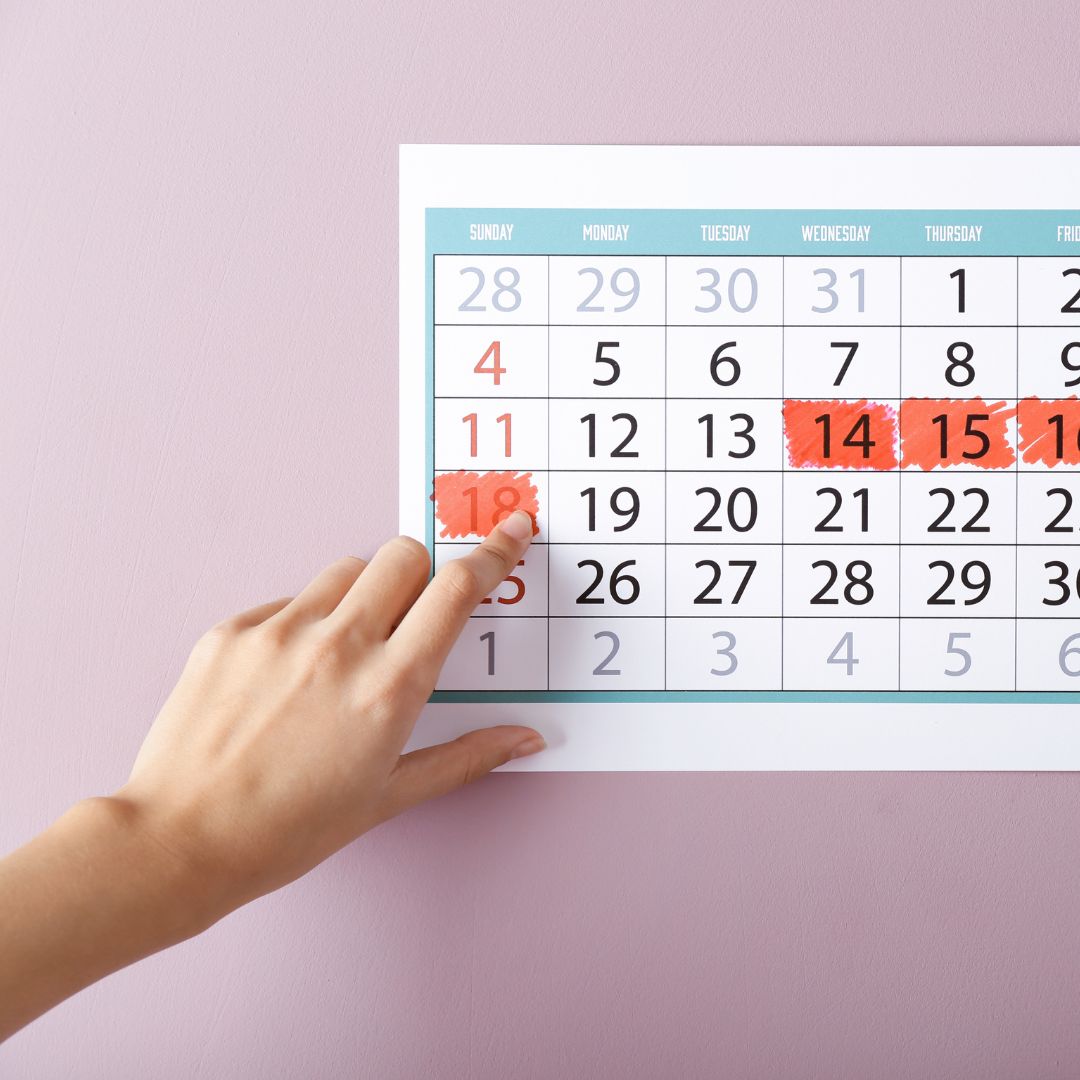
Menopause is determined retrospectively. Its timing is defined when no menstrual bleeding has occurred for over 12 months - the very last period that occurred is the so-called menopause. Menopause is thus a point in time, not a phase.
Postmenopause
What is often mistakenly referred to as menopause is actually postmenopause - i.e., the phase that follows menopause, the last menstrual period. This phase is characterized by the fact that no more menstrual bleeding occurs.
The terms are often confused. Menopause is not the same as menopause, but rather the time before and after it. Another term for menopause is climacteric.
Do I have menopausal symptoms?
Hot flashes, night sweats, unwanted weight gain - do you feel that you might be going through menopause and suffering from typical menopausal symptoms? Or perhaps you have an unfulfilled desire to have children? Then it is worth having the symptoms checked by a gynecologist. Because these symptoms can actually be well treated through lifestyle changes, diet, herbal remedies, and if necessary, medication.
It is possible to determine the status of your ovarian reserve - and thus your follicle count and fertility - hormonally. For this purpose, anti-Müllerian hormone (AMH) is measured. AMH is produced by mature women in the granulosa cells of the ovaries. These cells surround the maturing follicles, from which fertilizable eggs can be released. The less AMH there is in the blood, the fewer follicles there are in the ovary - a sign of approaching menopause. The blood test is supplemented by the determination of inhibin B, estradiol, and FSH. The timing of menopause can thus be estimated and possible menopausal symptoms treated [2].
What are the most common menopausal symptoms?
There are a variety of menopausal symptoms that can occur. Those you hear about most often are indeed also the ones that occur most frequently: About 75% of women complain of hot flashes and night sweats. These symptoms are worsened by excess weight, nicotine consumption, depression, and alcohol consumption.
Due to the estrogen deficiency that accompanies later menopause, unpleasant symptoms such as vaginal dryness - and thus pain during sex and loss of libido - as well as bladder problems occur. Many women complain of an irritable bladder, difficulty or painful bladder emptying, or frequent urinary tract infections.
More than every third person (37%) going through menopause complains of sleep disturbances and the resulting fatigue and mood swings. In fact, people with ovaries in perimenopause have a 2-4 times higher risk of depressive moods and a higher risk of developing depression.
Since the duration of menopause varies, the duration of the symptoms that occur also varies: while some people suffer from them for a few years, others can experience menopausal symptoms for up to 15 years [2].
How are menopausal symptoms treated?
There are various ways to alleviate the severity of menopausal symptoms. Some symptoms can possibly be greatly reduced through an adjusted lifestyle, but very few women are completely symptom-free*.
After controversial discussions, hormone replacement therapy is now once again widely used. Originally used as a miracle cure for menopausal symptoms, enthusiasm quickly cooled again due to significant side effects. Today, it is known that hormone replacement therapy (HRT) is a safe treatment method after a careful assessment of the benefits and risks and the exclusion of possible risk factors. Especially osteoporosis, which frequently occurs in women during menopause due to the lack of sex hormones, can be prevented with hormone replacement therapy [3, 4].
If you do not want to use hormones or if HRT is not possible for you for health reasons, there are various herbal or dietary supplements that can alleviate the symptoms. The best known are probably black cohosh and phytoestrogens from red clover or soy (soy isoflavones) [2].
Locally applied estrogen creams or phytoestrogen creams can help with vaginal dryness or an irritable bladder.
For menopausal symptoms such as depression, anxiety, other psychological problems, as well as effects on the blood vessels, curcumin, a compound from turmeric, and vitamin E have been shown to be helpful. They reduce oxidative stress and inflammatory reactions and increase antioxidant potential. [5]
Generally, symptoms can be alleviated and quality of life improved through applications such as hormone yoga, hypnosis, meditation, relaxation exercises, cognitive behavioral therapy, and reflex zone massage [2].