


If I'm honest, I hardly know a woman who hasn't asked at least once: "Why are the causes of my cycle irregularities such a mystery?"
You probably know the feeling too.
Sometimes your period comes too early. Other times, it's way too late. Sometimes it's so heavy that you have to change your pad every two hours. Or it's so light that you wonder if it's even normal anymore.
For months now, I myself haven't been sure whether I should go to my gynaecologist because of my completely irregular bleeding.
Is perimenopause knocking at the door, is stress the cause, or is it something more serious?
If you're asking yourself similar questions, you've come to the right place.
Contents:
What exactly are cycle irregularities?
An overview of the most common cycle irregularities
Causes of cycle irregularities: What's really going on?
How is a cycle irregularity diagnosed?
Frequently Asked Questions (FAQ)
What exactly are cycle irregularities?
Let's be honest: the "perfect" 28-day cycle is a myth.
Most women have cycles between 25 and 35 days. That's completely normal.
Experts call a regular, symptom-free cycle eumenorrhoea.
But almost no woman has that all the time.
They only become cycle irregularities when:
- Your period is absent for more than 3 months (unless you're pregnant or breastfeeding)
- Your bleeding comes more frequently than every 21 days
- The bleeding lasts longer than 8 days
- You have such severe pain that painkillers don't help
- Intermenstrual bleeding occurs regularly
An overview of the most common cycle irregularities
Amenorrhoea: When your period is completely absent
That sounds dramatic at first, but it's often harmless.
Primary amenorrhoea: You have never had your period (after age 15) Secondary amenorrhoea: Your period suddenly stops
Many menstruating women experience this during exam periods. No period for months. The reason? Extreme stress and not eating enough because of exams.
Oligomenorrhoea: Infrequent menstruation
When your period only comes every 35-90 days.
This can have various causes of cycle irregularities:
- PCOS
- Hypothyroidism
- Severe overweight or underweight
Polymenorrhoea: Too frequent menstruation
Every 21 days or more often.
This is often a sign that no ovulation is taking place. Or that your hormone balance is messed up.
Hypomenorrhoea: Too light menstruation
When your period is very light or only lasts a few days.
This often happens:
- After years of taking the pill
- With hypothyroidism
- During puberty or before perimenopause
- With extreme stress or underweight
Hypermenorrhoea: Too heavy bleeding
When you:
- Lose more than 80ml of blood (that's about 16 fully soaked tampons)
- Have to change every hour
- See large clots in the blood
This can lead to iron deficiency and make you tired and weak.
Menorrhagia: Too long menstruation
When your period lasts longer than 7 days. Often combined with very heavy bleeding.
Dysmenorrhoea: Period pain
Severe pain and cramps during bleeding. From mild pulling to cramp-like pain that keeps you bedridden.

Causes of cycle irregularities: What's really going on?
This is where it gets interesting.
The causes of cycle irregularities are as diverse as we women ourselves.
Hormonal causes
Your hormone balance is like a finely tuned orchestra. If even one "musician" falls out of step, everything sounds wrong.
The most important hormonal disruptors:
- Thyroid diseases: Both hyper- and hypothyroidism
- PCOS: Affects about 10% of all women
- Luteal phase deficiency (corpus luteum insufficiency): Too little progesterone in the second half of the cycle
- Insulin resistance: Often linked with PCOS
- Excess prolactin: Can have various causes
- Brain disorders: Problems with the hypothalamus or pituitary gland
During diagnosis, a hormone panel is often created. Important hormones such as prolactin, oestrogen, FSH, and LH are measured. This gives insight into where the problem lies.
Lifestyle factors
This is where it gets personal.
Stress is the biggest cycle disruptor of all.
I know this from my own experience. When I'm under pressure, my body reacts immediately. Either my period comes too early or way too late.
Other lifestyle factors:
- Extreme sports: Yes, too much exercise can be harmful
- Significant weight fluctuations
- Sleep deprivation: Many underestimate it
- Diet: Too little fat or calories
- Alcohol and nicotine
The pill and its consequences
Let's talk honestly about the pill.
Many women stop taking it and wonder why their cycle is acting crazy. That's normal. Your body first has to learn to produce its own hormones again.
For some, this takes 3 months. For others, up to 2 years.
In our interactions with our customers on fenou's social media channels, one of the most common concerns is that people are still longingly waiting for their period or a regular, predictable cycle for months after stopping the pill.
Diseases and medications
Sometimes cycle irregularities are a symptom of something else:
Common diseases:
- Endometriosis
- Fibroids or polyps
- Diabetes mellitus
- Celiac disease
- Von Willebrand disease (blood clotting disorder)
- Autoimmune diseases
- Eating disorders
Additional symptoms may occur:
- Hirsutism (increased body hair)
- Acne
- Weight fluctuations
- Depression and sleep disorders
Medications that affect the cycle:
- Antidepressants
- Blood thinners
- Corticosteroids
- Chemotherapy

How is a cycle irregularity diagnosed?
Ideally, your doctor will perform various tests:
Standard diagnostics:
- Detailed discussion about your symptoms
- Gynaecological examination
- Hormone panel (blood test for FSH, LH, prolactin, oestrogen)
- Thyroid values
Extended diagnostics:
- Ultrasound of the pelvic organs
- Basal body temperature chart (shows whether ovulation is taking place)
- Hysteroscopy (uterine examination) if polyps or fibroids are suspected
Keep a menstrual diary - this helps your doctor enormously with the diagnosis.
When should you be concerned?
You know your body best.
But there are clear warning signs.
Go to the doctor if:
- Your period is absent for more than 3 months
- You have severe pain that restricts you in everyday life
- Intermenstrual bleeding occurs regularly
- You are very tired and weak
- Additional symptoms occur (significant weight gain, hair loss, etc.)

What you can do yourself
Here are my best tips from personal experience:
Reduce stress
Concrete measures:
- Meditation or yoga: Even 10 minutes a day help
- Enough sleep: 7-8 hours are mandatory
- Set boundaries: Learn to say "no"
- Relaxation rituals: Warm bath, tea, book
Optimise your diet
What is good for your cycle:
- Enough healthy fats: Avocado, nuts, olive oil
- Complex carbohydrates: Whole grains, oatmeal
- Protein at every meal
- Lots of vegetables: Especially leafy greens and cruciferous vegetables
- Less sugar and processed foods
Natural support
This is where our hormone quiz comes in. It helps you find out where your hormone balance is out of balance.
Proven medicinal plants:
- Chasteberry: For PMS and irregular cycles
- Red raspberry leaf: Traditionally for cycle discomfort
- Chicory: Antispasmodic and regulating
- Cruciferous plants: contain indol-3-carbinol and sulforaphane, which influence oestrogen metabolism
- Flaxseed: contains phytoestrogens (lignans)

Monitor your cycle
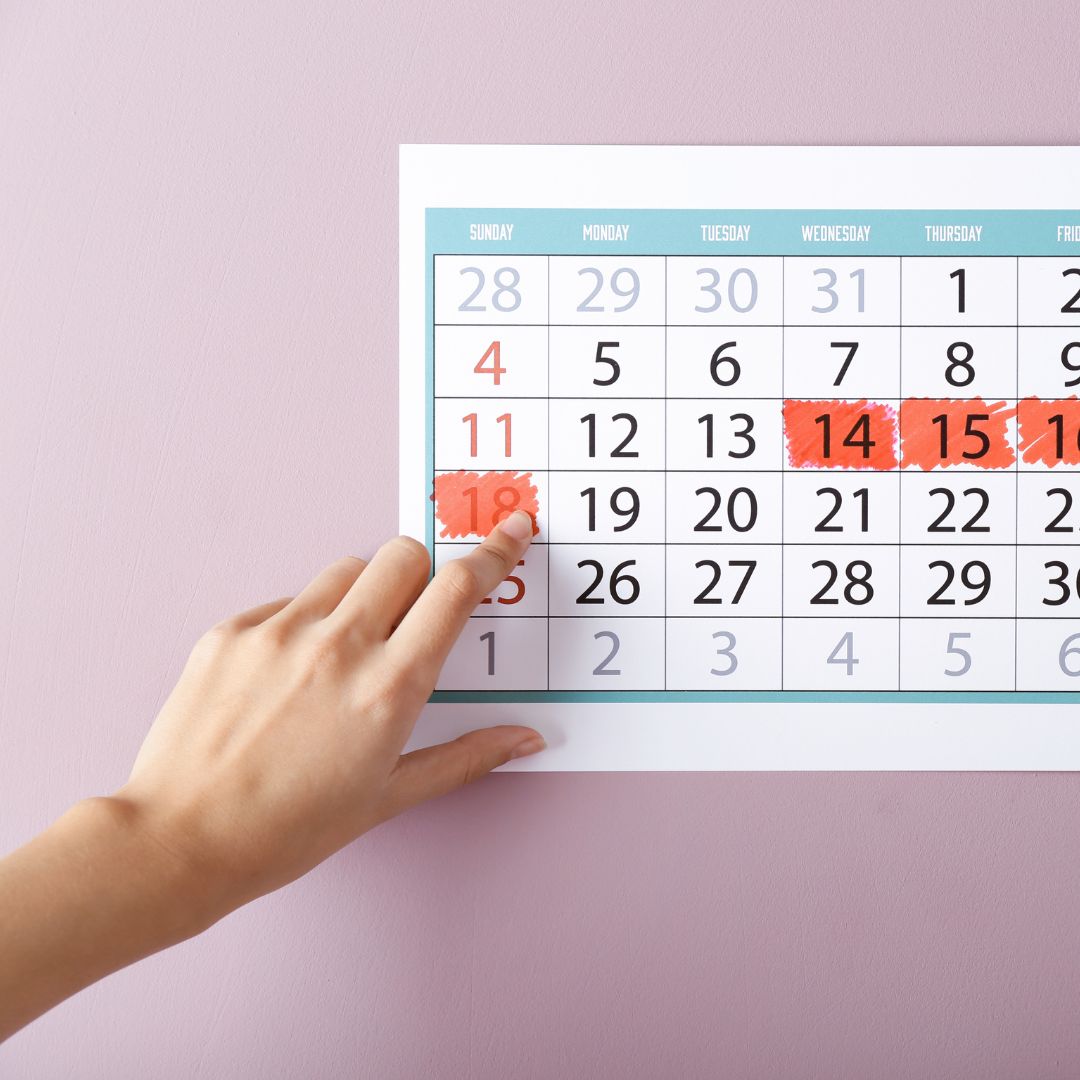
Keep a menstruation diary.
Note:
- Cycle length
- Bleeding intensity
- Pain
- Mood
- Stress level
This way you can recognise patterns and take targeted countermeasures.
Frequently Asked Questions (FAQ)
Are irregular cycles always concerning?
No, definitely not. Especially after stopping the pill, during stressful phases, or with weight fluctuations, irregular cycles are normal. It only becomes critical when they last longer than 6 months or are accompanied by severe discomfort.
Can stress really have such a big impact?
Absolutely. Stress increases cortisol, which inhibits the production of sex hormones. This can lead to missed ovulations and irregular bleeding.
How long does it take for the cycle to normalise after stopping the pill?
This is very individual. Some women have regular cycles again immediately. Others need 6-18 months. In rare cases, it can take up to 2 years.
What does it mean if I have very severe period pain (dysmenorrhoea)?
Severe dysmenorrhoea can have various causes:
- Endometriosis
- Fibroids
- Adenomyosis
- Inflammation
Be sure to have this checked if painkillers don't help.
Can supplements help with cycle irregularities?
Yes, but only if there is a deficiency. Especially important are:
- Vitamin D
- B vitamins
- Magnesium
- Omega-3 fatty acids
- Iron (for heavy bleeding)
What is luteal phase deficiency (corpus luteum insufficiency)?
This means that your body produces too little progesterone after ovulation. Signs are:
- Short second half of the cycle (less than 10 days)
- PMS symptoms
- Difficulty getting pregnant
From what age are irregular cycles normal?
During puberty (the first 2-3 years after the first period) and from the mid-40s (preparation for perimenopause), irregular cycles are completely normal.
Can I regulate my cycle on my own with natural remedies?
That depends on the cause. For stress, mild hormonal fluctuations, or after stopping the pill, often yes. With diseases such as PCOS or endometriosis, you usually need additional medical support.
My conclusion
Understanding the causes of cycle irregularities is the first step toward a healthy cycle.
Your body is not a machine. It reacts to stress, diet, sleep, and your living circumstances.
The most important thing: Listen to your body. Observe it. And be patient with yourself.
If you need support, feel free to take our free hormone quiz. It shows you where your hormone balance stands and what steps make sense for you.
And remember: You are not alone with the causes of your cycle irregularities - almost every woman knows the feeling.