Haarausfall in den Wechseljahren: Ursachen, Lösungen und Pflegetipps

Hair Loss During Menopause: Causes, Solutions, and Hair Care Tips

Are you experiencing increased hair loss during menopause? You are not alone—natural hormonal fluctuations also affect your hair follicles. We cannot stop menopause, but you don't have to simply accept it.

In this article, you will learn…

…why hair loss naturally occurs during menopause.

…which personal care products are particularly beneficial during menopause.

…how diet and lifestyle can help with hair loss during menopause.

Contents:

Why does hair loss occur during menopause?

How does hair structure change during menopause?

What helps with hair loss during menopause?

Diet

Supplements

Lifestyle

What hair care products should I use during menopause?

What care tips are available for hair loss?


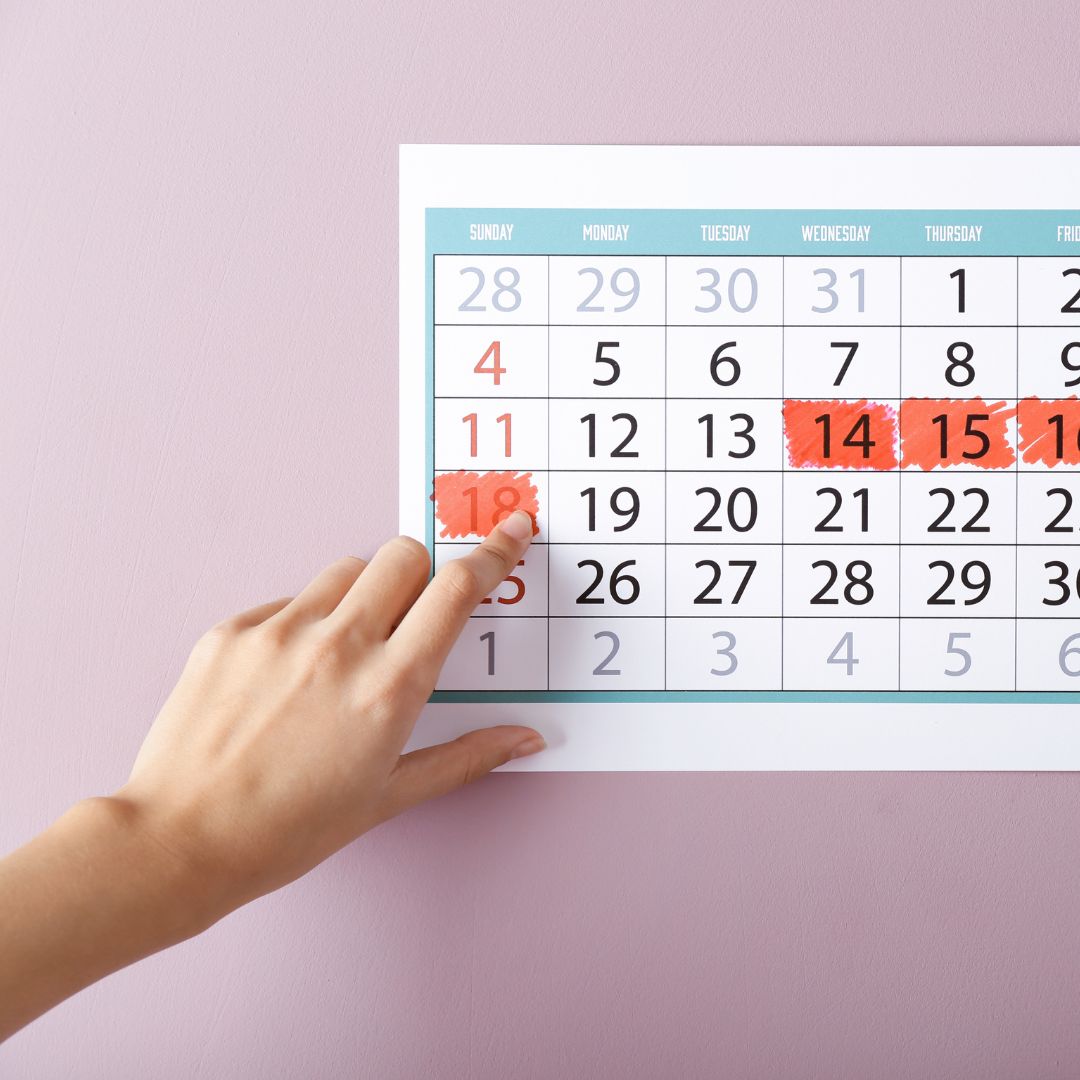
During menopause, major hormonal changes occur in the female body. This leads not only to the well-known menopausal symptoms such as hot flashes, sweating, irregular cycles, or dry mucous membranes. The skin and hair also suffer from declining estrogen levels. 

Why does hair loss occur during menopause?

  • Declining estrogen levels
  • Increasing influence of male hormones
  • Increased stress levels and cortisol production

Hair follicles have numerous estrogen receptors. Estrogen prolongs the growth phase of the hair, stimulates growth, protects the hair follicles, and counteracts the damaging effects of other hormones such as testosterone and increased sebum production. The hair is strong and full. This is particularly noticeable during pregnancy, when estrogen levels are persistently high. During menopause, estrogen levels drop and the protective effect is lost. The effect of testosterone dominates and the harmful effect of stress hormones on the hair follicles cannot be sufficiently balanced out either [1]. More follicles enter the resting phase and the hair falls out.

How does hair structure change during menopause?

The structure of the hair changes due to the hormonal effect.

  1. Decrease in hair volume due to thinner, less voluminous hair
  2. Change in hair thickness due to a finer hair structure
  3. Slowed growth due to a shorter growth phase
  4. Increased dryness leads to brittle, dull hair
  5. Increase in gray hair
  6. Increased body hair due to testosterone (hair on male-typical body areas such as the chin or chest)

What helps with hair loss during menopause?

Of course, when distress is high, there are various medical approaches to treat hair loss during menopause. A well-known remedy is, for example, minoxidil or hormone replacement therapy.

But if you prefer to support your hair follicles and hair roots naturally, you can focus on diet, lifestyle, and plant-based active ingredients.

Diet

For healthy hair, a diet based on plant-based foods such as fruit, vegetables, whole grains, legumes, nuts, and plant oils is recommended. These foods are rich in antioxidants, anti-inflammatory substances, and secondary plant compounds. The group of polyphenols, in particular, is considered to promote hair growth [2,3]

The following are considered particularly healthy for the hair:

  • fresh flaxseeds
  • Green tea
  • Pumpkin seeds
  • Nettle
  • Turmeric
  • Saw palmetto (e.g., our beauty x cycle)

You should avoid:

  • Coffee
  • Sugar
  • Alcohol
  • Dairy products

Are there supplements that help with hair loss?

Generally, the following supplements are recommended for healthy hair:

  • Biotin
  • Zinc
  • Iron
  • Vitamin D

However, whether all of them are useful when no direct deficiency exists is debatable. You can find detailed information on micronutrients and nutrition in general for hair loss in our article “Nutrition for hair loss”.

Lifestyle changes

Hair follicles react sensitively to stress hormones such as cortisol. Especially when the effect of estrogen declines, this damaging effect cannot be sufficiently balanced out. 

Reducing stress can help—yes, we know, it is easier said than done. But with small moments of relaxation that also promote physical activity, you can already do quite a bit to reduce your stress levels. 

  • Stress reduction through meditation, yoga, or mindfulness
  • Interval training, strength training, and exercise that builds muscle but does not cause additional stress (e.g., yoga, Pilates, light cardio)

The best shampoo against hair loss during menopause

If your hair loss is caused by the declining effect of female hormones, it is important to support the hair follicles in other ways. Because the effect of testosterone becomes stronger, active ingredients that reduce the conversion of testosterone at the hair follicles can be helpful. We developed the grow shampoo specifically for daily hair cleansing. The shampoo should also contain active ingredients that stimulate blood circulation in the scalp and thus the supply of the hair follicles. The shampoo should care for the existing hair and strengthen the hair structure.

Some active ingredients are particularly valuable for hair loss. These are contained in our grow hair shampoo:

  • An active complex of bamboo, plant-based keratin, and extracts of butterfly-wing milkweed protects your hair against external influences [4].
  • Saw palmetto fruit showed an effect on estrogen receptors in studies and was able to stimulate hair growth in androgen-related hair loss [5].
  • Rosemary promotes blood circulation in the scalp, has antioxidant potential, and also has antimicrobial effects [6]. 
  • Nettle leaves act on 5-alpha-reductase and can thus reduce androgen-related hair loss [7].

Care tips for healthy hair during menopause

In addition to choosing the right hair product, you can also support your hair with additional care.

  1. Use moisturizing hair masks.
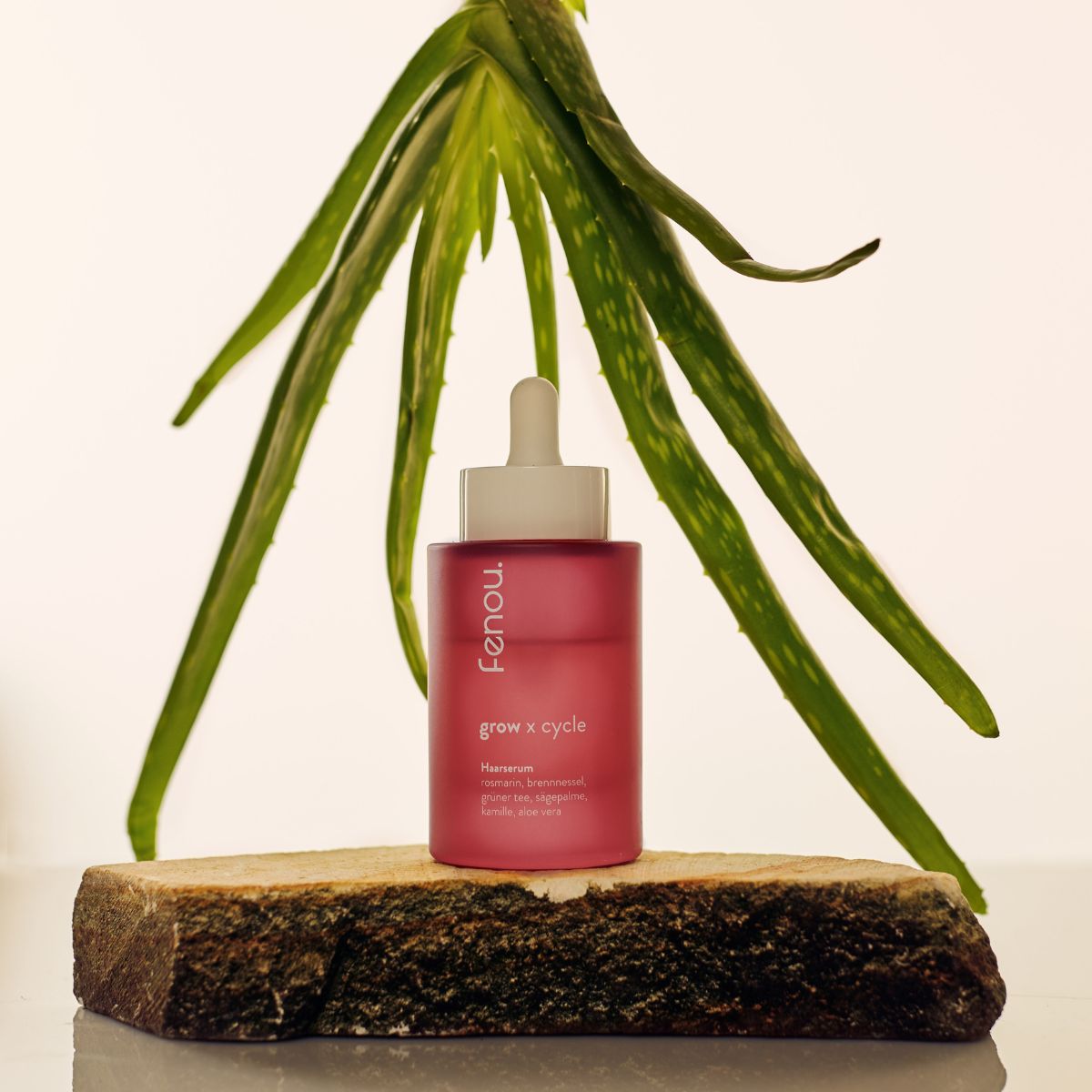
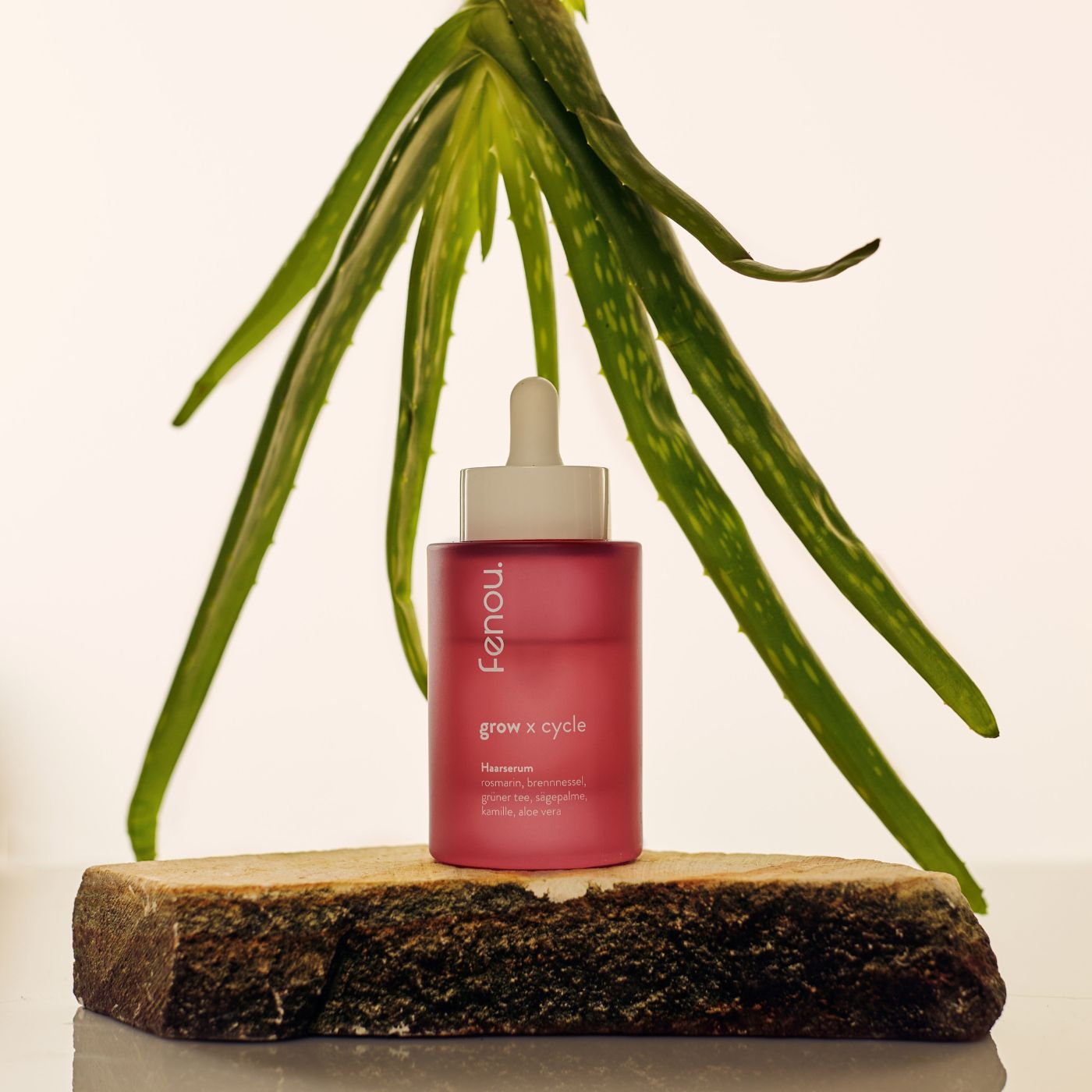
  2. Regularly massage your scalp with blood-stimulating hair serums or hair tonics. Ideally, these should also contain active ingredients that inhibit the conversion of testosterone, such as the fenou grow hair serum, which can remain on the scalp and does not need to be washed out.
  3. Avoid hair styling that puts additional strain on the hair, such as intense heat, chemical treatments, or dyeing.
  4. Avoid hairstyles that pull on the hair roots. Loose hairstyles are better than tight ponytails. 
  5. Protect your hair from UV radiation.

Hair loss during menopause is treatable

Although hair loss during menopause is common, there are many ways to address it besides medical treatment. With the right care, suitable products, and a hair-friendly lifestyle, you can strengthen your hair and promote growth.
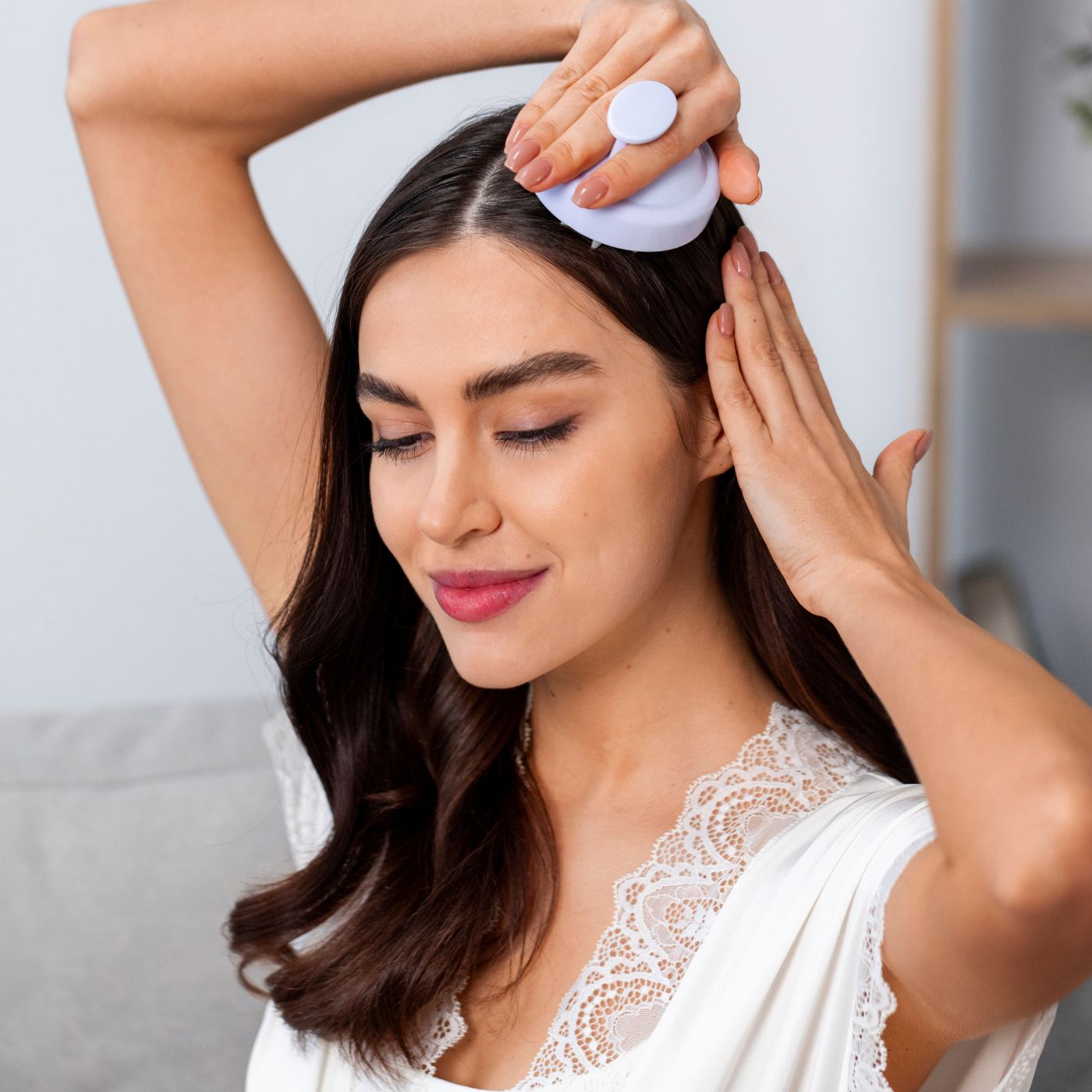
weiblich gelesene Person massiert sich mit Haarmassagebürste den Kopf, haarausfall vorbeugen, was hilft bei haarausfall in den wechseljahren

Did you know that?

This is how you can prevent hair loss

Your hairstyle: tight, strict braids or knots have a pulling effect on the hair roots. This allows the hair root to detach from the follicle more quickly. Loose hairstyles are better.

Blood circulation in the scalp: A well-supplied scalp supplies the hair follicles with oxygen and nutrients and thereby stimulates the hair follicles. A head massage with hair tonic or hair serum with stimulating extracts of rosemary or birch can promote blood circulation and also ensure relaxation.

Hair care: Use natural cosmetics that rely on natural ingredients. Ingredients that stimulate blood circulation (z.B. Rosemary), that stimulate hair growth (z.B. Saw palmetto) and that inhibit the conversion of testosterone to DHT (z.B. Nettle, horsetail, green tea) are good.

Your diet: There are foods that are particularly rich in nutrients that have a positive effect on hair growth. These include fresh flax seeds, green tea, pumpkin seeds, nettle, turmeric. You should avoid coffee, sugar, alcohol and dairy products.

Reduce stress: Cortisol not only has a damaging impact on hair follicles, but also on all other processes in the body. So reducing stress is always a good idea!

Did you know that?

How fast does hair grow?

During the growth phase, hair grows on average around 1 to 1.5 centimeters per month. Human hair goes through 3 growth cycles: the growth phase, transition phase and then the resting phase in which the hair is shed from the follicle. The hair is in the growth phase for several years and hair follicles enter the resting phase every day. For this reason, out of an average of 80,000 - 150,000 head hairs, around 70-100 hairs fall out every day [8].

natural: 100%- Natürliche Zutaten- Vegan-
Glutenfrei- Laktosefrei- Ohne Zusatzstoffe

Flasche fenou grow Haarserum mit Aloe, bei Haarausfall

Can we recommend something to you?

grow serum x cycle

Hair loss during menopause, reviews for grow hair serum x cycle.
Our customer Andrea D. writes: "Very easy to use, pleasantly refreshing. After three months of use, I can say that the hair loss has significantly reduced and the small, fine hairs at the base of my forehead are growing longer. I am almost 62 years old and have always had very fine hair and I have the impression that it also has a general volume effect on me after application." Try it out too!

weiblich gelesene Person beißt in einen Pfirsich, gesunde ernährung für die haare, ernährung bei haarausfall

Still curious?

Nutrition for hair loss

The right diet has a positive influence on your overall well-being: on your hormonal balance, on your body weight, on your digestion, on your skin, on your immune system, etc. As always, we have of course summarized for you which diet is particularly healthy for your hair health.

For Further Reading

References

1 Hirose A et al. Investigation of exacerbating factors for postpartum hair loss: a questionnaire-based cross-sectional studyInt J Womens Dermatol . 2023 Jun 16;9(2):e084.
2 Gokce N et al.An overview of the genetic aspects of hair loss and its connection with nutrition. J Prev Med Hyg. 2022 Oct 17;63(2 Suppl 3):E228-E238.

3 Pham CT, Romero K, Almohanna HM, Griggs J, Ahmed A, Tosti A. The role of diet as an adjuvant treatment in scarring and nonscarring alopecia. Ski Appendage Disord 2020;6:88-96.

4 https://activeconceptsllc.com/products/ac-kerazyme/
5 Murugusundram S (2009) Serenoa repens: does it have any role in the management of androgenetic alopecia? J Cutan Aesthet Surg 2:31–32.
6 Panahi Y et al. Rosemary oil vs minoxidil 2% for the treatment of androgenetic alopecia: a randomized comparative trial. Skinmed. 2015 Jan-Feb;13(1):15-21.
7 Pekmezci E, Türkoğlu M. URTICA DIOICA EXTRACT DOWNREGULATES THE GENE EXPRESSION OF 5Α-RII IN HACAT CELLS: POSSIBLE IMPLICATIONS AGAINST ANDROGENIC SKIN DISEASES. Georgian Med News. 2023 Jan;(334):6-9.
8 Araujo R et al. Biology of human hair: know your hair to control it. Adv Biochem Eng Biotechnol. 2011:125:121-43.

fenou supports acceptance and equality in society!

When we talk about “women,” we mean anyone who identifies as a woman and/or has female sex organs from a biological perspective. However, our work is based on the sex hormones that circulate in the human body when a uterus and/or ovaries are present. Therefore, our articles and products may not apply to you, even though you identify as a woman. We are also aware that not everyone with female sex organs identifies as a woman. We also want to reach out to people who do not identify as female (such as transgender, intersex, and non-binary people) with our informative posts and by no means want to exclude them. We use gender-neutral language in our posts whenever possible and are continuously educating ourselves. So please feel free to contact us if you have constructive suggestions for more inclusive language!