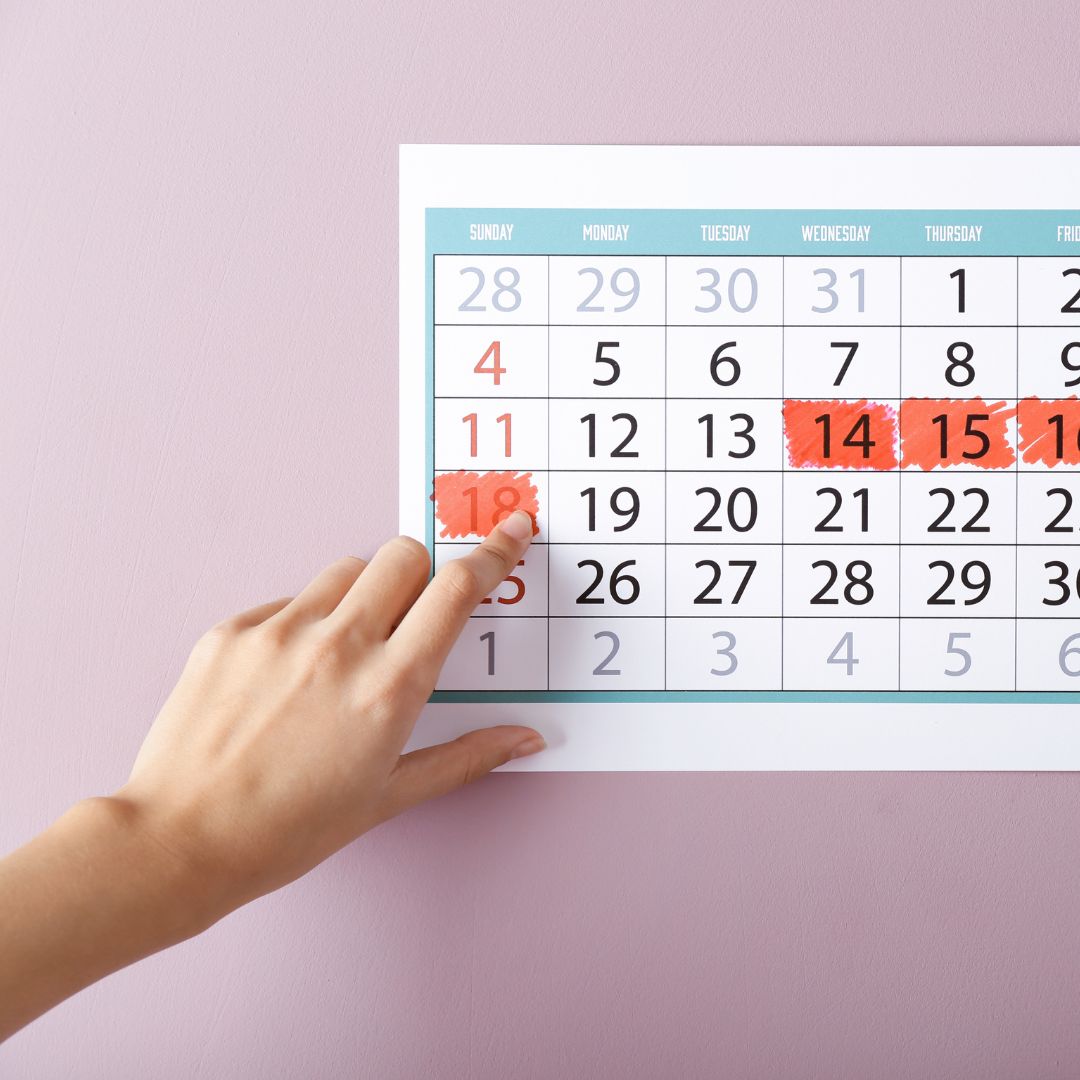



Tampons, pads, cups and co. - every month again, about 40 years and 10,000 - 17,000 products in the life of a menstruating person. It is astonishing (well, or maybe not, as we have often noted) that this has been such a minor topic in our society for so long. Menstruation and menstrual products have always been there, but no one has talked about it, buying tampons is still shameful for many. Fortunately, this is currently changing rapidly. Finally.
Because there have always been menstruating people, of course. And they certainly never found it pleasant when the blood ran down their thighs and stained their clothes. It has been discovered that Egyptian women*, for example, twisted soft tampons made of papyrus. Greek women* wrapped strips of cloth around wood. But moss, wool, grass or animal hide also served as menstrual aids for menstruating people throughout human history. Sounds bizarre? But it was not that long ago. Because the production of menstrual products as we know them today only began on a large scale in the last century. Are you really still surprised?

But fortunately we have them now, tampons, pads and co., and in greater abundance than ever before. So let's take a look below the belt!
Tampon - “The Classic”
Although tampons have always been used somehow, the first patent for this product was only filed in 1931. A tampon is basically nothing more than a multi-layered strip of fabric that was twisted and shaped with a cover. Our today's tampons consist of viscose, cotton, plastic or a mix of these. The tampon is inserted directly into the vagina with the fingers or an insertion aid, where it absorbs the blood in the body. It can be removed using a retrieval string. Tampons are available in different sizes for different flow strengths. Depending on the flow strength, a tampon can stay in the body for several hours, but should be changed after 8h, otherwise the risk of TSS (see info box) increases. And yes, you can certainly forget about such a tampon sometimes, that has certainly happened to some of us before! Tampons are disposed of in the trash and must under no circumstances be flushed down the toilet. Unless you have no problem with a plumber pulling a used tampon out of the clogged pipe in front of your eyes.
When buying, you should make sure to buy organic tampons. Conventional tampons contain various health-compromising ingredients, such as plasticizers or fragrances. The vaginal mucosa is a highly absorbent tissue and is in contact with the products for a long time.

TSS - Toxic Shock Syndrome
TSS refers to poisoning by bacterial toxins, which can bring about serious to fatal consequences such as liver, kidney, or multi-organ failure. TSS is rare, but is observed in connection with menstrual products.
Pads - “The Uncomplicated”
In the First World War, nurses discovered that cellulose dressings have a highly absorbent effect - why not use them as a menstrual product? In the 1920s, pads were then produced industrially for the first time. Back then, they were still attached with safety pins, clips or a pad belt in the panties. Today, pads have an adhesive strip or adhesive wings, with which they are glued in the panties. Today's conventional pads have the same chemical problem as tampons. So you should also value organic products here. Avoid especially scented variants. Especially if you frequently suffer from vaginal yeast infections, the organic variants (d) can be your solution.

Did you know…,
that the menstrual products used within one year in the DACH region leave behind waste for 600,000 filled bathtubs?
Cloth pad - “The More Sustainable”
You like using pads, but the sustainability aspect somehow still bothers you? Then cloth pads might be THE menstrual product for you. These are pads that are ideally made of organic cotton and consist of absorbent and leak-proof layers. They are usually attached with snap buttons in the panties. There are different sizes for different flow strengths. You can wear cloth pads in the same situations as normal pads. You just have to pack them in a wet bag after changing them on the go, to transport them to your home washing machine.

Menstrual cup - “The One That Requires Getting Used To”
Menstrual cups or also -”caps” are not as new as you might think. Yes, they only appeared prominently on the market a few years ago, but the first patents were already in the 19th century. In 1937, there was the first reusable menstrual cap made of latex. The typical cups, as we know them - smooth on the inside, with a stem at the bottom -, have been made of medical silicone since the beginning of the 21st century. The material of the cup is so flexible that it can be folded. This is how it is inserted into the vagina and placed around the cervix. The blood is then collected in the cup. To remove it, you release the slight vacuum, take the cup out and empty the blood in the toilet. After rinsing, the cup is ready to use again. After menstruation, you boil it once. Using a menstrual cup honestly takes some practice and above all requires good knowledge of your own anatomical conditions in the vagina. But it is worth it when you get the hang of it, because you can use a menstrual cup for years and - except for sexual intercourse - at any time. At the beginning, you can also use a cloth insert additionally, so that you feel safer.

Menstrual underwear - “The Comfortable”
Menstrual underwear is great. It basically makes you forget that you have your period, because you no longer wear anything more than a pair of panties. And you would do that without menstruation too (or would you, you naughty thing, you?). Menstrual underwear can absorb the liquid of 1-4 tampons. Its lining consists of several layers, which either absorb the blood or protect the panties from leaking. By now, there are also variants in the most diverse colors, sporty or with lace, hardly distinguishable from normal panties. You should just pay attention to organic raw materials again.

Menstrual sponge - “The Natural”
Menstrual sponges are real natural sponges (Attention: This is not a vegan menstrual product, but an animal organism), which are simply inserted into the vagina and soak up the blood there. The wearing time depends on the flow strength. When the sponge is full, it is pulled out with the fingers, washed out, squeezed out and can then be inserted again.

Soft tampons - “The Naughty”
Soft tampons are unknown to many, but have been common in the erotic industry for a long time, for example. Because they are also small, soft, synthetic sponges here, which are completely inserted into the vagina, you can easily wear them during sexual intercourse without the blood splashing (it naturally depends on the genre whether this is desired...). The soft tampon is inserted into the vagina and placed in front of the cervix. Here it absorbs the blood. To remove it, you grab it with your fingers and pull it out, there is no retrieval string. How often the soft tampon has to be changed depends on the flow strength.
Update 2024: By now, of course, there are also soft tampons, where an optional retrieval string can be attached.

Free Bleeding - “The Final Boss?”
Free bleeding. Just let it flow? Nooo, much better: The menstrual blood is expelled by the uterus in bursts. These bursts can be felt in advance with a little observation of your own body and its signals, then you go to the toilet and let the blood flow freely. At the beginning of menstruation, there are more frequent bursts, between which different amounts of time can pass, towards the end of the period, the intervals become increasingly larger. The longer you practice free bleeding, the more mindful you become of your own rhythm, which is very individual. Free bleeding naturally requires a lot of commitment. But it is probably worth a try, right? For safety, maybe in combination with a cloth pad?

As you can see, there are now very many, very good period products between which you can choose. And in the end, you don't have to decide on one variant. Often, a combination of different products makes sense for your wallet, the environment and your sense of safety. The important thing is that we no longer do this secretly, but stay in dialogue, above all with the industry, so that all needs of menstruating people can be taken into account.
Update - The Menstrual Disc
A really great new product development on the market of period products is the menstrual cup. If you still haven't found the perfect solution for your flow, then we definitely recommend you to try a menstrual disc!
The disc is super flexible and soft. It is squeezed together and then completely inserted into the vagina. Due to its size and length, it can be inserted comfortably, it does not have to be pushed up as high as the menstrual cup. Since the disc consists of very thin, film-like material and is only stable at the edges, you can even continue to wear it during sexual intercourse.
Positioning the disc takes a little practice, but is not as complicated as with the cup. The trick: You can wear the disc for up to 12h, it has a large capacity and even empties itself partially when you go to the toilet. In our opinion, a gamechanger!