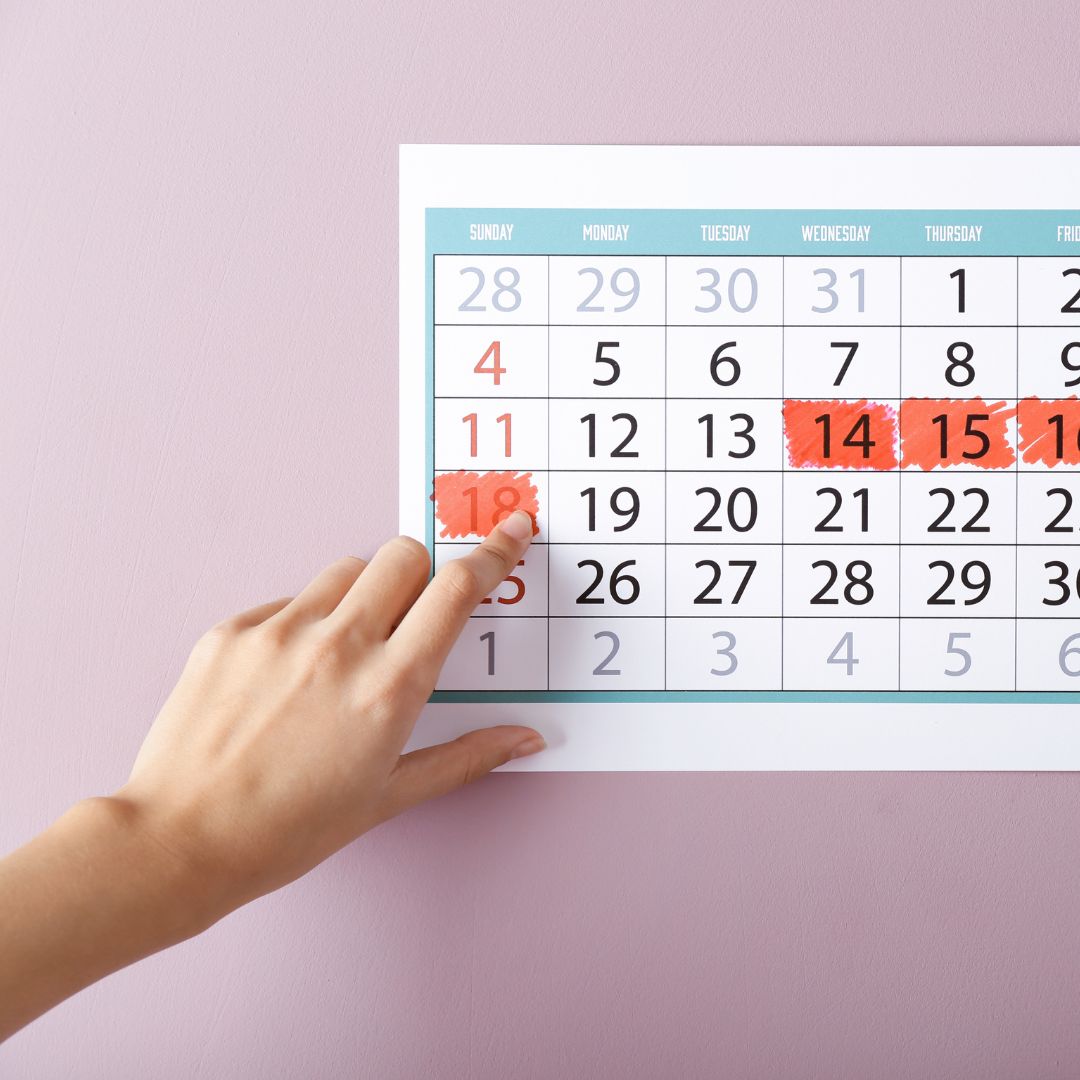



Premenstrual dysphoric disorder is a major disruption to daily life for those affected and has a profound impact on their quality of life. We have already explained what PMDS is in this blog post. But as always, we are interested in what life with PMDS is really like. What are the experiences of real women from our community? We asked interview participants via Instagram and are delighted to share the stories of 3 strong women.
Their answers touched us and also showed us that the diagnosis, treatment, and therapy of PMDS are neither easy nor particularly accessible. PMDS can be influenced by one's own behavior, but that requires a lot of discipline. Let's hear it from Emma, Eva, and Nadine.

When and how did you find out that you have PMDS?
Four years ago, when I was 19, I found out that I have PMDS. I observed my cycle and wrote down which symptoms accompanied me.
What specific symptoms do you experience during the PMDS phase, and how long do they last?
The symptoms appear 2 weeks before my period starts. During the PMDS phase, I suffer from depression, anxiety, mood swings, and changes in appetite.
What methods or strategies have helped you cope with the challenges of PMDS and improve your quality of life?
Above all, I pay attention to my diet, i.e., no caffeine, only natural sugar, high-fiber foods, no alcohol, etc. In addition, yoga, meditation, mindful breaks, routines, meal prepping, and of course balance by fenou help me.
Do you receive support from your social circle, and how do you and your social circle deal with each other during the PMDS phase?
Everyone in my social circle knows. They care for me, give me space, listen to me, are there for me, and support me.
What advice or information would you give to other people affected by PMDS who may be facing similar difficulties?
You are not alone, and you can do something about it to make yourself feel better. It is difficult, but it is worth it :)


When and how did you find out that you have PMDS?
I had (unfortunately!) been on hormonal contraception from the age of 14 until I was 30, and after that, I didn't have a period for 2 years. Then, little by little, a regular cycle gradually returned. It was a rollercoaster of emotions... I didn't recognize myself. And so I started observing/reflecting and realized that my mood at the beginning of the cycle was sometimes the exact OPPOSITE of how it was before my period. Through Googling and research, I came across the term PMS and then PMDS, and at first, I was just relieved that I wasn't alone.
What specific symptoms do you experience during the PMDS phase, and how long do they last?
It varies now and has improved completely. When I wasn't paying as much attention to it, it was 1.5 to 2 weeks before my period, especially during times of stress, it lasted longer and was more pronounced. The symptoms also vary. Now it is sometimes only a few days before my period, sometimes less pronounced, sometimes more pronounced.
I have to say, I am otherwise a cheerful person, a ray of sunshine, very optimistic, and I take very good care of myself. During a PMDS phase, that changes, and it is a rollercoaster. Symptoms include: low mood to full-blown depression, anxiety, doubt, sadness, doubt, questioning everything, insecurity, lack of motivation. In addition, there are physical symptoms (PMS).
What methods or strategies have helped you cope with the challenges of PMDS and improve your quality of life?
First of all, KNOWLEDGE of what is going on inside me and that I am not crazy. That was the beginning of the improvement.
Over time, I have tried a lot with herbal remedies, paying attention to my diet (such as no caffeine if possible, little salt, lots of vegetables/fruit, whole foods, "clean", but also satisfying emotional hunger when the craving for something is there), therapeutic help and conversations, understanding from my partner, keeping a diary, yoga, nature, exercise, and finding great pages like yours on Instagram and getting informed. And importantly: not driving myself crazy, everything passes... that has always been the case so far :) Fortunately, I have now found a good way to deal with it, sometimes it works better than others. I'm on my way ;)
Do you receive support from your social circle, and how do you and your social circle deal with each other during the PMDS phase?
My partner knows and he can deal with it very well. Also because we talk openly about it. My friends understand it too. Especially those who also use natural contraception or have used it. Most know the symptoms of PMS or PMDS. But I have also often had to explain what PMDS and PMS even are, and then understanding usually followed.
I try not to take everything to heart, knowing that "Mrs. Doubt" is just there for now, and she will go away too. When I feel like withdrawing, I withdraw, and it usually works.
What advice or information would you give to other people affected by PMDS who may be facing similar difficulties?
Get informed and talk about it, and try to find out individually what feels good and what nourishes you. Lots of self-care and acceptance. When you start paying attention to it, it can be difficult. But over time, it is definitely worth it.

When and how did you find out that you have PMDS?
After stopping the pill... the second half of the cycle from then on, especially just before my period, was simply terrible. I didn't recognize this at all, and then I got to the bottom of it.
What specific symptoms do you experience during the PMDS phase, and how long do they last?
The worst: mood swings, really awful. I am deeply sad or really angry. Conflicts arise because I lose my temper over pointless things. I also suffer from low mood, cravings/binging, extreme breast tenderness (especially 2-3 days before my period), weight gain due to water retention (I often don't like my body at that time), and anxiety & inner restlessness, sometimes also with sleep problems.
What methods or strategies have helped you cope with the challenges of PMDS and improve your quality of life?
Unfortunately, I haven't found THE method for myself yet. Hormones (like the pill, etc.) are out of the question for me. However, I notice that the more balanced I eat during the cycle, the better it gets. But never completely good... that is sometimes frustrating. Exercise also helps. But getting there is sometimes really hard because nothing really helps. But I have also tried teas, etc.
Do you receive support from your social circle, and how do you and your social circle deal with each other during the PMDS phase?
My husband is my greatest support, my rock, when I can only see the chaos around me dancing. He helps me a lot. He takes me in his arms when I need it (and sometimes don't even know it), tells me how beautiful I am (while I am currently destroying my no. 1 craving, a Kinder bar) and goes through the darkest emotions with me. Without him, I don't know how I would sometimes get through it.
What advice or information would you give to other people affected by PMDS who may be facing similar difficulties?
You are not your PMDS. You are not your emotion. Beneath it, completely hidden and a little shrunken, is still you. And with every cycle, we learn a little more how to bloom as we really are. You can do it, we can do it!
Thank you very much to Emma, Eva, and Nadine. We wish you all the best and that your PMDS always makes itself noticeable as little as possible 🧡