


Contents:
How is the pill connected to weight
Do you gain weight from the pill?
Altered eating habits from the pill
Do you lose weight after stopping the pill?
Weight control through intuitive eating
Stopped the pill and suddenly have a few extra kilos? Or did you lose weight after stopping the pill? When you browse the internet and forums for testimonials, you read a multitude of potential personal horror stories - and end up no wiser than before. Yet all you want is to make a well-informed decision. How does the body change after stopping the pill? Stopping the pill without any nasty surprises - that can't be that hard, can it? The topic of stopping the pill and weight concerns many women and deserves sound information.
Stopping the pill and weight - How are they connected?
Researching the topic of stopping the pill and weight caused me a lot of concern. Because the body of studies turned out so differently than expected, we asked our community on Instagram about their experiences for a (non-representative) reality check. 48% report gaining weight while taking the pill, 6% report losing weight, and 46% have experienced no change in their weight from taking the pill. After stopping the pill, 22% report gaining weight, 32% report losing weight, and 45% report no change. And that is exactly what I expected and thought I saw confirmed by the body of studies.
But: In fact, there is a major discrepancy between the body of studies and the perceptions or experiences of users and doctors. While weight changes with taking or stopping the pill occur in every second woman according to anecdotal evidence, the body of studies tells a different story: The proportion of women who gain weight from taking the pill is in the single-digit percentage range, and you simply read nothing about weight changes after stopping the pill. There is reason enough to dig through the studies and get to the bottom of the matter.

Weight gain from the pill?
Every second one of our surveyed customers reports gaining weight. According to the body of studies, it looks completely different. Here, only minimal differences in weight development are found in people using hormonal contraception compared to women without oral contraceptives. And even then, only in a small, single-digit percentage. The weight changes are in the range of 0.3 - 2 kg and are relativised as physiological weight fluctuations or normal weight gain during puberty. The period during which the weight was observed varies greatly. For transparency and opinion-forming, it should also not go unmentioned that these are primarily manufacturer studies.
It is questionable whether women who experience significant unwanted weight gain from the pill continue to use the pill for contraception and thus are not more likely to be lost to follow-up in the studies (3). Whether the preparations used are combination pills or pure progestogen pills at least makes no difference (5).
Water retention from the pill
Although the overview of the data suggests that the pill has no effect on weight, this phenomenon is nevertheless frequently reported by users and doctors. In fact, weight gain, along with weight loss, is also listed as a possible side effect in the pill's package insert. Various causes are discussed. On the one hand, weight gain could be explained by a change in water balance, as the pill has an effect on the renin-angiotensin system. This regulates the distribution of body fluids. Stimulation of this system leads to less water being excreted by the kidneys (4). This can lead to water accumulation in the body and thus increase weight. You can read tips for water retention here.
As convincing as this explanation sounds, there are also studies that show the exact opposite. Even though overall hardly any weight changes were measured here either, it was found that when minimal gains did occur, they were not caused by body water, but by an increased body fat percentage (6). The cause of this could be the pill's effect on eating behaviour.
Changes in appetite and food selection from the pill
Cholecystokinin is a hormone of the gastrointestinal tract and is responsible, among other things, for triggering the feeling of fullness. The pill inhibits the release of cholecystokinin and thus leads to both suppressed satiety and increased appetite (7). More appetite, more food intake, more weight.
The pill's effect on eating behaviour is also very interesting. One study found that pill users consume more energy from fat, but less from carbohydrates. The total energy intake was the same, but the different composition of the diet could affect appetite, hunger, and the utilisation of nutrients (8).
Weight gain from temporary hypothyroidism
A side effect of the pill, which is also listed in the package inserts of the preparations, is temporary hypothyroidism caused by the artificial hormones (9). A typical symptom of hypothyroidism is weight gain. Through a diet that supports thyroid function and is, for example, rich in selenium and iodine, symptoms of hypothyroidism could be alleviated or, conversely, exacerbated by an unfavourable diet. Perhaps an explanation for the different effects of the pill on body weight could be found here. But since there are no studies on this, it remains speculation. In the magazine, you can read even more about the effects of the pill on metabolic organs.
Weight loss after stopping the pill
If taking the pill does not cause general weight gain, then not much should change after stopping it, right? However, the topic of stopping the pill and weight shows that reality is more complex.
Nevertheless, many users (in our small non-representative survey, a full third) report weight loss after stopping the pill. This could be connected to the phenomena described above, which are reversible after stopping the pill: water retention subsides, eating habits change, or thyroid function normalises. Perhaps stopping the pill also leads to a conscious decision to prioritise health, which also affects other areas such as diet and physical activity. As far as we know, there are no studies on this.
Weight fluctuations from hormonal imbalance
Some women report gaining weight after stopping the pill. In fact, there are no studies that confirm or even explain weight changes after stopping the pill. However, anyone researching the topic of stopping the pill and weight should understand hormonal imbalances as a possible cause. However, a possible accompanying symptom of stopping the pill is oestrogen dominance due to the hormonal transition.
After stopping, the natural hormone balance must regulate itself. This can take at least 3 months, but can also continue for significantly longer (10). This is accompanied by various hormone fluctuations with different typical symptoms.
An imbalance in the oestrogen-progesterone balance is not uncommon. After stopping the pill, a deficiency can occur in both the body's own oestrogen and progesterone production. If too little progesterone is produced in relation to oestrogen, indirect oestrogen dominance occurs.
On the other hand, it can happen that the sensitive hormone balance reacts with overproduction and leads to a direct oestrogen excess.
Both variants have the same symptoms. And one of the symptoms of oestrogen excess and progesterone deficiency is weight gain.
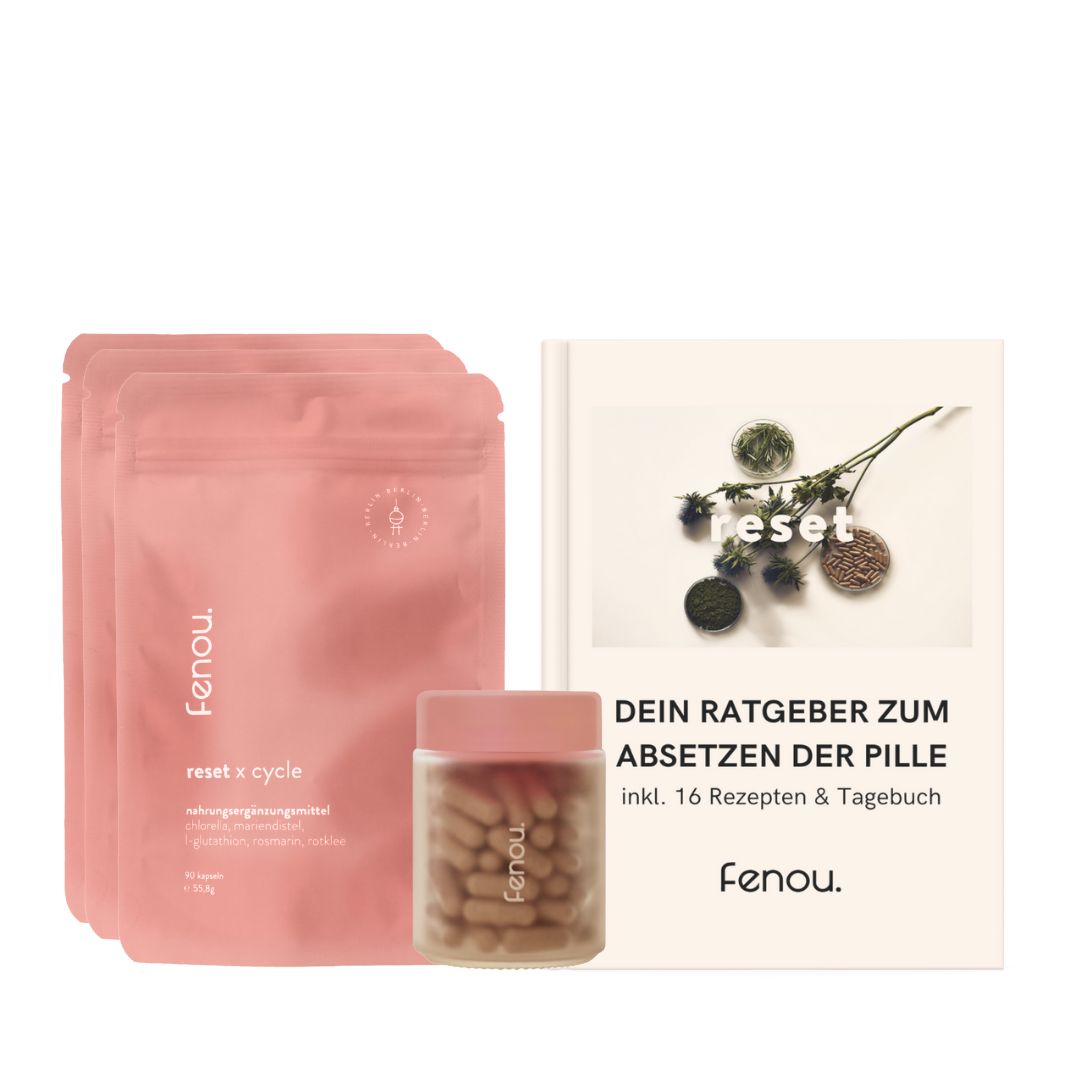
So, if you want to prevent your weight from changing after stopping the pill, it makes sense to support your body in regulating the hormone balance. For everyone who is worried about stopping the pill and weight, a healthy lifestyle with a balanced diet, physical activity, and good stress management is the first step. You can effectively support your organs with supplements perfectly tailored to your needs. Here, we would like to highly recommend our products reset specifically for the needs of taking the pill and balance for balancing the oestrogen balance, which we have developed precisely for this purpose with great care and expertise.

Stabilise weight through intuitive eating?
If the fear that your weight might change unintentionally from stopping the pill is holding you back from stopping the pill, we would like to recommend a way of eating that will do you good holistically and in the long term: intuitive eating or mindful eating. This method can be particularly helpful if the topic of stopping the pill and weight causes uncertainty.
Your eating habits were shaped from the first day of your life on. The very first breast milk gave you a sense of warmth, safety, and love in a cold, bright, loud environment after your birth. Food has provided us with security ever since, is a feature of our social structures and our culture. This is how a certain dish or meal can still satisfy the need for love, social contact, security, or peace in adulthood.
The foundation for unhealthy eating habits is also laid in childhood: a lollipop as a reward from the paediatrician, a pretzel in the stroller gives the parents more time while shopping, “If you are good now, you will get an ice cream later.” Food comforts, food dispels boredom, food rewards - and these learned, subconscious patterns remain with us as adults as long as we do not question them.
Have you ever thought about what situations you eat in? Does it only happen when your stomach growls and your body lets you know that you are hungry? Or do you belong to the people who stretch out after a stressful day and reward themselves with a large sweet? Do you perhaps not eat anything for days when you are chasing deadlines? How about when you have to deal with unpleasant tasks? Is a bag of chips or gummy bears accompanying you? And the classic example, which is so gladly taken up as a cliché in film and television - heartbreak. What does that do to your eating habits?
Nutrition can satisfy a wide range of needs. And that is fundamentally nothing bad at all, as long as you are aware of it. Because as soon as you become aware of unconscious patterns, you can break them and create new patterns that better suit you and your health. A stable, satisfying weight is not primarily the result of an optimised nutrient composition, counting calories, or discipline in a diet. A positive feeling about your body and a healthy body begin in the mind with conscious eating behaviour that accepts fluctuations and does not confuse needs such as appreciation, comfort, or security with hunger. If you appreciate your nutrition, you can also appreciate your body and its very own individual shape.
Intuitive eating in brief
Intuitive eating fills entire guidebooks. In the references, you will find a few tips for further reading.
To break it down: Become aware of your needs. If you feel an appetite, think about what reason you want to eat right now. Often there are much better alternatives. The need for rest or peace can be fulfilled by meditation, for example. A hot bath also offers security and warmth, a phone call with a good friend provides comfort. Books, sports, or a walk also offer distraction. Dancing or singing can distract from food, reduce stress, and lift your mood. Often, just a short, conscious pause is enough to distinguish emotional hunger from actual hunger. The important thing is that you find out what satisfies your needs and what is easy for you to implement. Of course, changing behaviour learned over decades is not that easy to implement. But every small step brings you closer to intuitive eating. If you want support, you will now find many nutritionists who work with mindfulness and systemic counselling.

Nourishing from within and out: Mindful nutrition
Mindfulness in eating goes hand in hand with intuitive nutrition. Through mindfulness, you learn your needs and patterns. Through mindful eating, you additionally give your nutrition the appreciation it deserves - and thus lay the first and most sustainable stone for a healthy diet and the acceptance of your body.
Mindful eating is not magic. Basic rule: Use your senses. Perceive your meals - with your eyes, with your tongue, with your nose, with your ears. Colourful, fresh, colourful foods and dishes not only provide you with healthy nutrients, but also bring visual joy and satisfaction. A beautifully plated dish and a set table whet the appetite and satisfy a wide range of needs even before the first bite. Chewing thoroughly, eating slowly, and taking breaks while eating without distraction allow you to perceive your feeling of fullness.
A conscious feeling of fullness prevents you from unconsciously eating too much or too little and instead allows you to take in exactly what your body needs. This approach can be particularly valuable if the topic of stopping the pill and weight concerns you and you are worried about uncontrolled weight changes.
Conclusion: Stopping the pill and weight - The most important findings
The topic of stopping the pill and weight is complex and varies individually. While studies show minimal weight changes, many women report significant changes - both gain and loss. It is important to understand that weight fluctuations after stopping the pill are normal and usually temporary. Anyone who is worried about stopping the pill and weight should focus on a healthy lifestyle, mindful nutrition, and hormonal support.
Disclaimer: Our recommendations can only apply to healthy people and do not replace medical advice for underlying conditions. There are various factors such as medication intake, illnesses, or mental states that influence nutrition. Here you may and should seek professional support that finds the best path for you together with you.
And please remember: People like bodies are diverse - health, beauty, and above all your worth are not defined by a thigh circumference, visible abdominal muscles, or a butt shape!