








von unseren Produkten
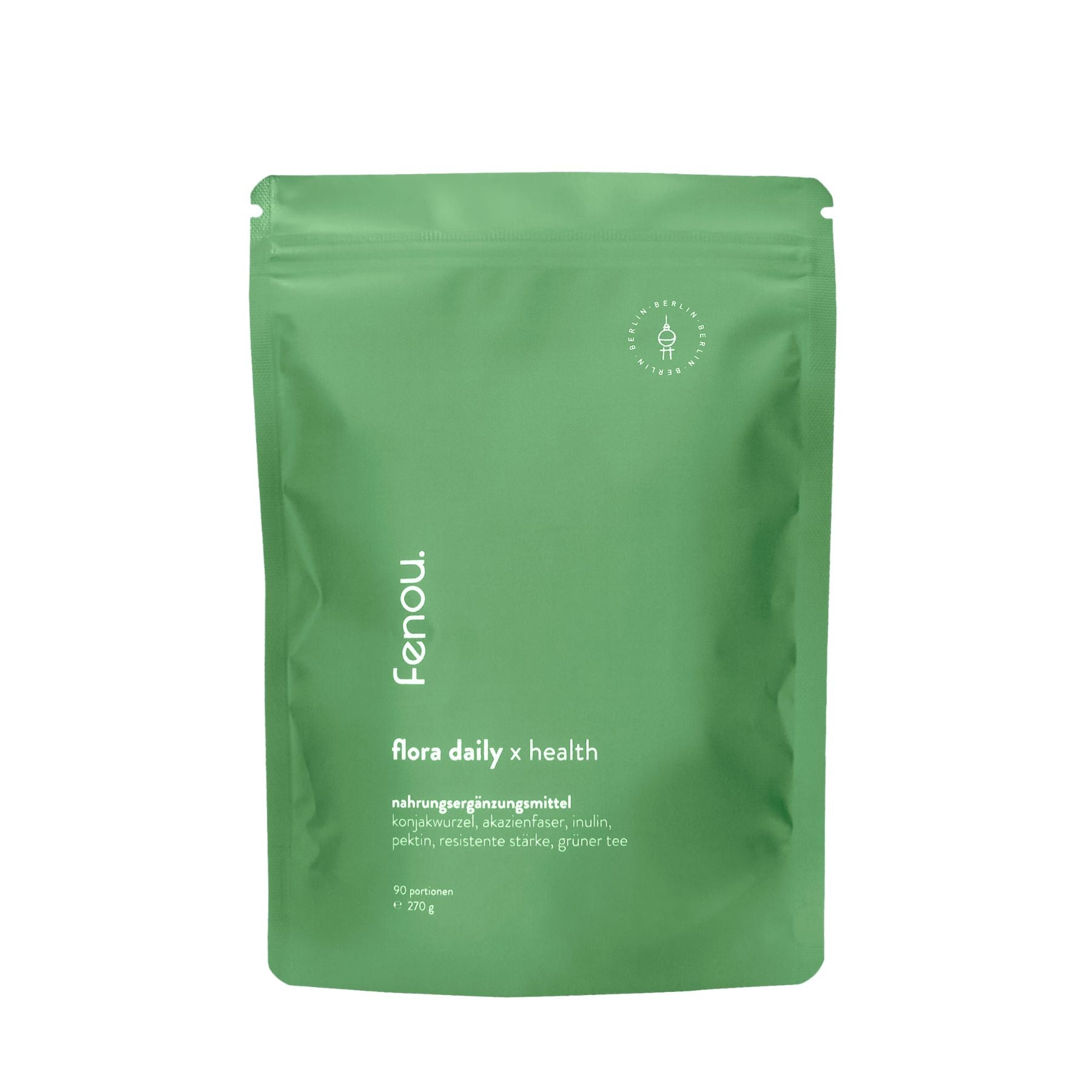
flora daily
 for flatulence, bloated stomach or constipation
optimal fiber composition from several sources as food for intestinal bacteria
contributes to the maintenance of normal mucous membranes (Vit B2)*
vor der Mahlzeit für stabileren Blutzuckerspiegel
for flatulence, bloated stomach or constipation
optimal fiber composition from several sources as food for intestinal bacteria
contributes to the maintenance of normal mucous membranes (Vit B2)*
vor der Mahlzeit für stabileren Blutzuckerspiegel
In stock - In 3-5 Tagen bei dir

30 Tage
Geld zurück Garantie

Kostenloser
Versand ab 50€ (DE)

Das macht das Produkt besonders


100% Vegan
Pflanzliche Inhaltsstoffe, Gluten- und Laktosefrei, ohne Zusatzstoffe

Laborgeprüft in DE
Ohne Pestizide und Schwermetalle, Tierversuchsfrei

Wissenschaftlich entwickelt
Basierend auf aktuelle Studien und mit Expertinnen entwickelt

Recyclebare Materialien
Nachhaltiges Refill-System, biologisch abbaubar
EINFACHE ANWENDUNG UND DOSIERUNG

CROWD
Dissolve a level measuring spoon in 200-300 ml of water 3 times a day and consume directly. Be careful, the product will swell if left standing for a long time. One bag of flora daily contains 270 g. This corresponds to the needs for one month.

CONSUMPTION
Depending on your needs, you can consume less powder. It makes sense to start with one spoon per day and then slowly increase the dosage.
DURATION OF CONSUMPTION
In combination with “flora pro”, consume at least half an hour before a meal. If consumed alone, consume with a meal.
Über 70.000 glückliche Frauen
die mit unseren Produkten ihre Beschwerden lösen konnten und happy sind.






Hochwertige Wirkstoffe für Deine Gesundheit
Mit Expertinnen aus den Bereichen Frauenheilkunde, Naturheilkunde und Ernährungswissenschaften entwickelt. Die ausgewählten Inhaltsstoffe basieren auf aktuellem wissenschaftlichen Stand.
|
per daily dose (9 g powder) |
%NRV* | |
Konjac root powder - of which glucomannan |
3.75g 3.0g |
** ** |
| Inulin | 1.0g | ** |
| Acacia fiber powder | 1.0g | ** |
| Resistant Corn Dextrin | 500 mg | ** |
| Pectin | 300 mg | ** |
| L-Arginine | 200 mg | ** |
| L-Tryptophan | 200 mg | ** |
Green tea extract - of which polyphenols - of which epigallocatechin gallate - of which caffeine |
158 mg 150 mg 71 mg 11 mg |
** ** ** ** |
| Niacin | 16 mg | 100 |
| Vitamin B2 | 1.4 mg | 100 |
| Biotin | 50 µg | 100 |
*Percent of nutrient reference values (NRV) according to Regulation (EU) No. 1169/2011
**No NRV available
Ingredients:
Konjac root powder (Amorphophallus konjac, contains 80% glucomannan) 42%, inulin (chicory) 11%, apple fruit juice powder (Malus domestica), acacia fiber powder (Acacia seyal) 11%, resistant corn dextrin 6%, peach fruit powder (Prunus persica), pectins 3%, L-arginine hydrochloride, natural flavor, L-tryptophan, green tea extract 25:1 (Camellia sinensis, contains 95% polyphenols, of which 45% epigallocatechin gallate and 7% caffeine) 2%, color: beta-carotene, nicotinamide, riboflavin, D-biotin
Amorphophallus konjac is a plant native to Southeast Asia and Africa that is used in medicinal preparations and as food. In studies u.a. Positive effects of konjac root have been found in obesity, type 2 diabetes mellitus, constipation and inflammatory skin diseases such as acne. The effect is based on the ingredient glucomannan, a fiber with a high soluble content. Glucomannan binds food residues in the small intestine and improves digestion by binding fluid, increasing stool volume and promoting peristalsis. The konjac root powder we use contains 80% glucomannan.
The fibers of Acacia seyal contain soluble fiber. They serve as food for the bifiobacteria and lactobacteria in the intestine. Our acacia powder comes from organic farming.
Inulin is a soluble fiber that comes from chicory. Like other fibers, inulin can regulate digestion and thus help with constipation and digestive problems. It also serves the intestinal bacteria, z.B. the bifidobacteria, as food.
Resistant corn dextrin is a water-soluble fiber. In our powder it serves as food for the lactobacilli that live in the intestines and in particular for the strains Akkermansia muciniphila and Faecalibacterium prausnitzii.Both are significantly involved in the formation of mucus in the intestines. Mucus is an important habitat for the microbiome.
The peach fruit powder gives our prebiotic its delicious, fruity taste.
Pectin is a soluble fiber that is z.B. found in the peel of apples. Pectin regulates digestion because it binds water in the intestines. For this reason, grated apple with peel is recommended for diarrhea. Pectin also serves as food for beneficial intestinal bacteria.
L-Arginine HCl is a form of L-arginine. It is produced in the intestine u.a. degraded to polyamines. Polyamines are needed for cell growth and thus ensure healthy, functional intestinal cells.
L-Tryptophan is an amino acid that can be metabolized into indole by intestinal bacteria. In studies, indole strengthens the intestinal barrier, is involved in building a healthy mucosal layer and reduces inflammatory factors.
The polyphenols contained in green tea, especially epigallocatechin gallate (EGCG), have an influence on the healthy intestinal bacteria Bacteroides, Christensenellaceae and Bifidobacterium. Unhealthy intestinal bacteria are inhibited.
Nicotinamide is an active form of vitamin B3. It contributes to the maintenance of normal mucous membrane function
Vitamin B2 contributes to maintaining normal mucous membrane function.
D-Biotin is the form of biotin that occurs naturally in food. Biotin contributes to maintaining normal mucous membrane function.

Konjac root powder
Amorphophallus konjac is a plant native to Southeast Asia and Africa, used in medicinal preparations and as food. Studies have shown u.aPositive effects of konjac root have been observed in cases of obesity, type 2 diabetes, constipation, and inflammatory skin conditions such as acne. This effect is based on the ingredient glucomannan, a highly soluble dietary fiber. Glucomannan binds food residues in the small intestine and improves digestion by binding fluid, increasing stool volume, and promoting peristalsis. The konjac root powder we use contains 80% glucomannan.
Konjac root powder
Amorphophallus konjac is a plant native to Southeast Asia and Africa, used in medicinal preparations and as food. Studies have shown u.aPositive effects of konjac root have been observed in cases of obesity, type 2 diabetes, constipation, and inflammatory skin conditions such as acne. This effect is based on the ingredient glucomannan, a highly soluble dietary fiber. Glucomannan binds food residues in the small intestine and improves digestion by binding fluid, increasing stool volume, and promoting peristalsis. The konjac root powder we use contains 80% glucomannan.

Inulin
Inulin is a soluble dietary fiber that is derived from chicory in our region. Like other dietary fibers, inulin can regulate digestion and thus help with constipation and digestive problems. It also benefits gut bacteria. z.B. the bifidobacteria, as food.
Inulin
Inulin is a soluble dietary fiber that is derived from chicory in our region. Like other dietary fibers, inulin can regulate digestion and thus help with constipation and digestive problems. It also benefits gut bacteria. z.B. the bifidobacteria, as food.

Acacia fiber powder
The fibers of Acacia seyal contain soluble fiber. They serve as food for the bifiobacteria and lactobacteria in the intestine. Our acacia powder comes from organic farming.
Acacia fiber powder
The fibers of Acacia seyal contain soluble fiber. They serve as food for the bifiobacteria and lactobacteria in the intestine. Our acacia powder comes from organic farming.
Resistant corn dextrin
Resistant corn dextrin is a water-soluble fiber. In our powder it serves as food for the lactobacilli that live in the intestines and in particular for the strains Akkermansia muciniphila and Faecalibacterium prausnitzii. Both are significantly involved in the formation of mucus in the intestines. Mucus is an important habitat for the microbiome.
Resistant corn dextrin
Resistant corn dextrin is a water-soluble fiber. In our powder it serves as food for the lactobacilli that live in the intestines and in particular for the strains Akkermansia muciniphila and Faecalibacterium prausnitzii. Both are significantly involved in the formation of mucus in the intestines. Mucus is an important habitat for the microbiome.
Pectin
Pectin is a soluble dietary fiber that... z.Bpectin is found in the peel of apples. It regulates digestion because it binds water in the intestines. For this reason, grated apple with the peel is recommended for diarrhea. Pectin also serves as food for beneficial gut bacteria.
Pectin
Pectin is a soluble dietary fiber that... z.Bpectin is found in the peel of apples. It regulates digestion because it binds water in the intestines. For this reason, grated apple with the peel is recommended for diarrhea. Pectin also serves as food for beneficial gut bacteria.
L-arginine hydrochloride
L-Arginine HCl is a form of L-arginine. It is produced in the intestine. u.aThey are broken down into polyamines. Polyamines are needed for cell growth and thus ensure healthy, functional intestinal cells.
L-arginine hydrochloride
L-Arginine HCl is a form of L-arginine. It is produced in the intestine. u.aThey are broken down into polyamines. Polyamines are needed for cell growth and thus ensure healthy, functional intestinal cells.
L-Tryptophan
L-tryptophan is an amino acid that can be metabolized into indole by intestinal bacteria. L-tryptophan is an essential amino acid. u.aIt acts as a precursor to serotonin and melatonin. L-tryptophan is found in foods such as cashew nuts, seeds, and oatmeal.
L-Tryptophan
L-tryptophan is an amino acid that can be metabolized into indole by intestinal bacteria. L-tryptophan is an essential amino acid. u.aIt acts as a precursor to serotonin and melatonin. L-tryptophan is found in foods such as cashew nuts, seeds, and oatmeal.

Green tea extract
Green tea (Camellia sinensis) is rich in the non-proteinogenic amino acid L-theanine. The extract we use contains 60% L-Theanine.
Green tea extract
Green tea (Camellia sinensis) is rich in the non-proteinogenic amino acid L-theanine. The extract we use contains 60% L-Theanine.

Niacin
Niacin belongs to the B vitamin group and plays a major role as an antioxidant, especially in the liver. The body can produce niacin from tryptophan. Tryptophan is found in protein-rich foods such as nuts, legumes, whole grains, and dark green leafy vegetables. Niacin is also found directly in legumes such as peanuts, cashews, and... z.BMushrooms.
Niacin
Niacin belongs to the B vitamin group and plays a major role as an antioxidant, especially in the liver. The body can produce niacin from tryptophan. Tryptophan is found in protein-rich foods such as nuts, legumes, whole grains, and dark green leafy vegetables. Niacin is also found directly in legumes such as peanuts, cashews, and... z.BMushrooms.

Vitamin B2
Vitamin B2 is an important cofactor in the metabolism of the three main nutrients: protein, carbohydrates, and fat. Its requirement is increased by taking the birth control pill. A vitamin B2 deficiency is suspected of contributing to migraines and headaches in pill-taking patients. Good sources of vitamin B2 include mushrooms, nutritional yeast, dark green leafy vegetables, and nuts. Vitamin B2 is relatively sensitive to heat but dissolves in water during cooking. Therefore, also use the cooking water from vegetables. z.B. as a sauce or broth.
Vitamin B2
Vitamin B2 is an important cofactor in the metabolism of the three main nutrients: protein, carbohydrates, and fat. Its requirement is increased by taking the birth control pill. A vitamin B2 deficiency is suspected of contributing to migraines and headaches in pill-taking patients. Good sources of vitamin B2 include mushrooms, nutritional yeast, dark green leafy vegetables, and nuts. Vitamin B2 is relatively sensitive to heat but dissolves in water during cooking. Therefore, also use the cooking water from vegetables. z.B. as a sauce or broth.

Biotin
Biotin is an important component of many enzymes. A deficiency can therefore manifest itself in various ways. Hair loss, skin problems, and even psychological issues can occur. z.BThese can be consequences of a biotin deficiency. Biotin is found in many plant-based foods. z.B. in legumes, nutritional yeast, whole grains, mushrooms or avocado.
Biotin
Biotin is an important component of many enzymes. A deficiency can therefore manifest itself in various ways. Hair loss, skin problems, and even psychological issues can occur. z.BThese can be consequences of a biotin deficiency. Biotin is found in many plant-based foods. z.B. in legumes, nutritional yeast, whole grains, mushrooms or avocado.
FAQ
Alle unsere Produkte sind 100% vegan.
Unsere Produkte sind grundlegend glutenfrei. Die Kreuzkontamination von Allergenen ist produktionsbedingt jedoch nicht gänzlich auszuschließen.
Die genaue Dosierempfehlung des jeweiligen Produktes findest Du auf der Rückseite der Packung oder weiter oben unter "Anwendung". Wir empfehlen unsere Produkte mit ausreichend Flüssigkeit idealerweise zu einer Mahlzeit und ungefähr zur gleichen Tageszeit zu verzehren.
Du kannst unsere Produkt generell kombinieren. reset kann mit allen Produkten kombiniert und sollte max. 3 Monate verzehrt werden, während die anderen Produkte durchgängig bis zur Beseitigung Deines Hormonchaos verzehrt werden. Lediglich während des Verzehrs von relief und mood empfehlen wir Dir den Verzehr der anderen Produkte zu pausieren. Die in relief enthaltenen Mineralstoffe und Vitamine sind bereits hochdosiert. Wenn Du mit relief und mood durch bist, kannst Du wie gewohnt mit den anderen Produkten weitermachen
Wir ermutigen dich, unsere Produkte 30 Tage lang zu testen und bieten dir dafür eine 30-Tage-Zufriedenheitsgarantie. Wenn du nicht zufrieden bist, kannst du eine Erstattung für ein Produkt pro Sorte innerhalb von 30 Tagen ab Erhalt deiner Bestellung beantragen. Die Erstattung erfolgt in Höhe des bezahlten Produktpreises abzüglich der Rücksendekosten (DE 4,90 €, EU-Länder 7,90 €, Schweiz 11,90 €) auf die ursprünglich verwendete Zahlungsmethode. Ungeöffnete Produkte schickst du mit dem von uns bereitgestellten Retourenlabel zurück. Geöffnete Produkte kannst du behalten, weiterverschenken oder entsorgen. Versandkosten der ursprünglichen Bestellung sind nicht erstattungsfähig.
Stay up-to-date
Blog posts



Östrogendominanz - Was wirklich hilft
13. May 2025