



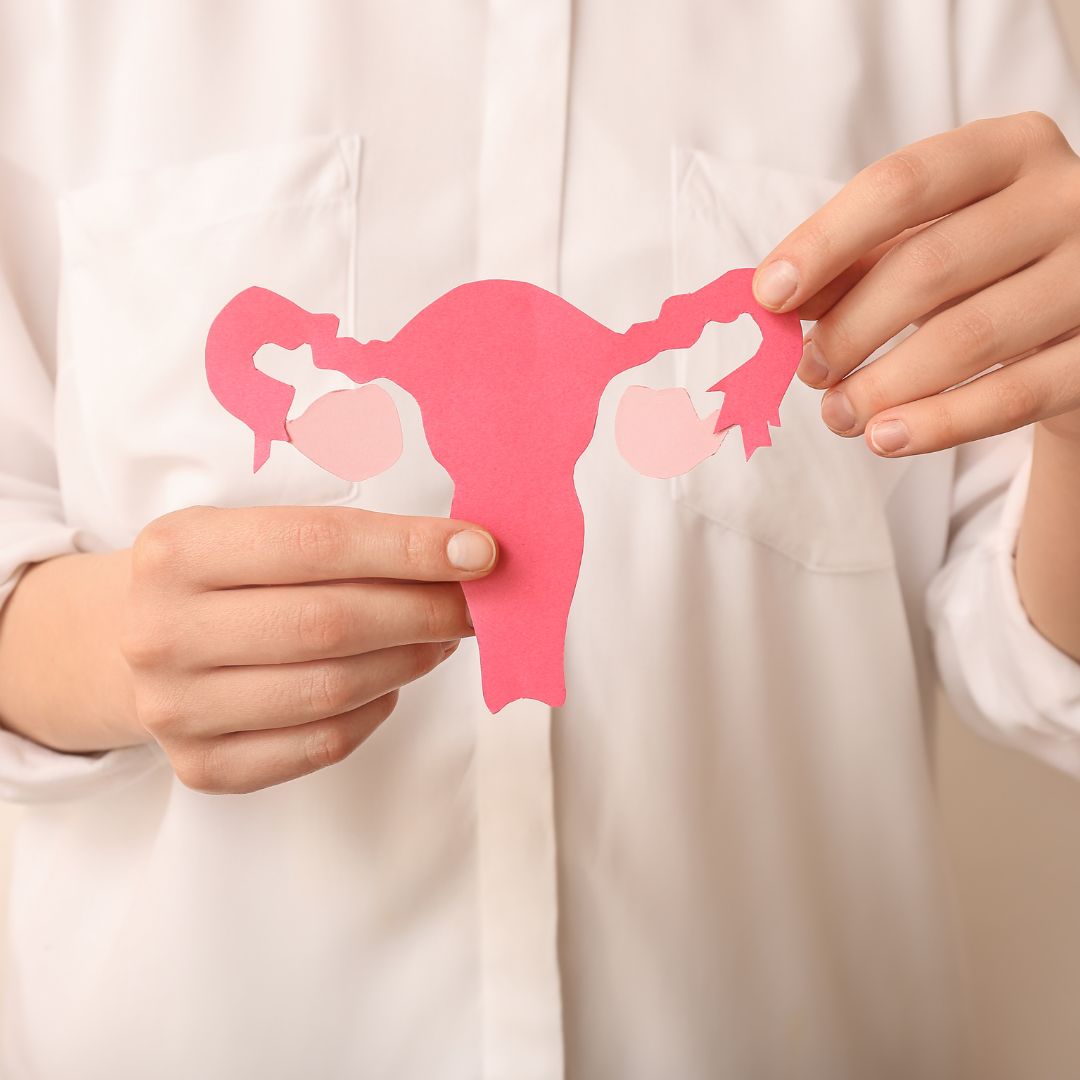
The sex hormones that significantly influence the female cycle are divided into three main groups: estrogens, gestagens (also called progestins) and androgens.
Hormones are produced by glands and move through our body via the bloodstream until they encounter organs with special receptors to which they can dock.
This article will focus on the progestogen progesterone, which binds to the uterus, cervix, vagina, breasts, testicles, but also to the brain, blood vessels and bones.
What is progesterone and where is it produced?
Progesterone is also called the corpus luteum hormone. It is produced by the corpus luteum in the second half of the menstrual cycle.
The corpus luteum is a type of cell cluster that develops from the follicle after ovulation. If the egg is not fertilized, the corpus luteum simply regresses, and progesterone production decreases until the next ovulation. More on this in the section 'Progesterone in the Cycle'.
A small amount of progesterone can also be produced by the adrenal cortex, and during pregnancy the placenta produces significantly higher amounts of the hormone.
Tasks and function of progesterone
To understand the menstrual cycle, it's essential to know how progesterone works in the body, what it's involved in, and what this hormone actually does throughout the cycle. But being informed about progesterone is also extremely beneficial for a healthy pregnancy or choosing the right contraceptive. Because when the delicate system of sex hormones becomes unbalanced, it can have a wide variety of effects on the body and the cycle.
What does progesterone do?
- Preparing the uterus for pregnancy
- Stops the buildup of the uterine lining caused by estrogen.
- Prepares the uterine lining for the implantation of a potentially fertilized egg.
- Various tasks related to pregnancy, z.BMaintaining pregnancy & Development of the mammary glands during pregnancy in preparation for breastfeeding
- After ovulation, it causes a slight but measurable increase in body temperature (the basal body temperature in the morning after waking up is increased by about 0.4-0.6 °C due to progesterone).
- Reduces cervical mucus production
- Reduces bowel activity (-> (possibly constipation as a result)
Progesterone in the cycle
Progesterone levels are rather low in the first half of the menstrual cycle. They only rise after ovulation, i.e., in the luteal phase.
How does this happen?
After menstruation, the release of follicle-stimulating hormone (FSH) in the ovaries triggers the growth of the follicles. One of the follicles grows particularly well, thus becoming dominant and containing at least one maturing egg cell. The fallopian tube then takes over and transports the egg cell. From this point on, the egg cell is ready for fertilization.
The follicle remains and develops into the corpus luteum. This then produces progesterone, as mentioned previously. In conjunction with estrogen, this prepares the uterine lining for a possible pregnancy.Finally, the egg cell could have been fertilized, and then it should of course be as comfortable as possible in the uterus.
If, however, a fertilized egg does not implant, which is usually the case, the corpus luteum regresses, progesterone production decreases, the uterine lining is shed, and menstruation begins. This process after ovulation lasts approximately 12-14 days, but this can vary depending on the progesterone level. (8)
Progesterone deficiency & Symptoms
In fact, progesterone, when present in the right proportions, makes us feel relaxed, calm, and positive about life. Progesterone is also known as the 'calming hormone'.
If there is too little progesterone, it is referred to as a progesterone deficiency or luteal phase defect. Essentially, this involves a hormonal imbalance caused by insufficient or insufficient progesterone production by the corpus luteum. If ovulation does not occur regularly (or at all) or if the body cannot produce enough progesterone, this may manifest itself through various symptoms. Most gynecologists become aware of this issue at the latest when a woman is experiencing difficulty conceiving.
Progesterone and estrogen dominance
Estrogen and progesterone are closely related. They enhance and complement each other. Therefore, estrogen dominance, meaning too much estrogen relative to progesterone, can also be the cause of a progesterone deficiency and lead to the following symptoms.
What are the symptoms of a progesterone deficiency?
Some symptoms of progesterone deficiency/estrogen dominance include:
- Spotting before menstruation occurs because the built-up uterine lining sheds prematurely.
- Menstrual irregularities, or a shortened second phase of the menstrual cycle
- Premenstrual syndrome (PMS): breast tenderness, irritability
- Depressive moods
- Mood swings
- weight gain
- Water retention
- Headache
- infertility
- Sleep disorders
- Skin and hair problems
- Loss of libido
Incidentally, it's common for progesterone levels to decline from the age of 40 onwards, because ovulation becomes less frequent and cycles longer. After menopause, when ovulation ceases, the corpus luteum also stops producing progesterone.
Causes of progesterone deficiency
The causes are quite diverse, and since the hormonal system is to be regarded as a coherent whole, disturbances of other hormones also play a role in a progesterone deficiency.
Some of the possible causes are:
- Hormonal changes during puberty, pregnancy and menopause
- Taking hormonal contraceptives
- Severe obesity
- Chronic stress
- Smoking and excessive alcohol consumption
- Poor nutrition, v.a. Deficiency of vitamin B6, vitamin B12, vitamin C, vitamin E, selenium, magnesium -> These ensure u.a.for estrogen breakdown
- Hormone-laden food or cosmetics, environmental toxins
What can be done about a progesterone deficiency?
Hormone therapy is often used to correct the deficiency. This can be in the form of capsules or creams. However, it is much more important to view the hormonal system as a whole, which is why it makes little sense to consider a hormone in isolation. Ultimately, all hormones must be in balance and in the correct proportions to each other.
Medicinal plants for progesterone deficiency
Hormone levels can be stabilized with the help of natural medicinal plants and a proper diet. When it comes to low progesterone levels, chaste tree (Vitex agnus-castus) is probably the best-known medicinal plant. Plant extracts from the yam root, specifically a compound it contains that resembles the body's own progesterone, can also be helpful. You can find both plants, along with many other helpful nutrients, in our product balance.
B vitamins for progesterone levels
A balanced diet rich in vitamins and minerals is absolutely essential, even in cases of progesterone deficiency. For example, vitamin B6 contributes to the regulation of hormonal activity. Foods rich in vitamin B6 include legumes, whole grains, green vegetables, and nuts. In general, particular attention should be paid to ensuring an adequate intake of B vitamins and magnesium.
Stress and progesterone
Another important measure to take is reducing stress. That's always easier said than done, and stress seems to be blamed for everything. But here's the background to progesterone deficiency: Progesterone is produced from cholesterol and is an important precursor for the production of other hormones such as certain estrogens, androgens, and also cortisol. Stress triggers the release of cortisol in the body. With prolonged stress, the body constantly strives to release more cortisol—to the detriment of progesterone. Since the stress response takes precedence, the body resorts to progesterone, which can then lead to a progesterone deficiency.
For example, meditation, yoga, breathing exercises, regular exercise, conscious breaks and moments of rest combined with sufficient sleep are suitable for stress management.
Balancing estrogen levels
Since estrogen and progesterone are so closely linked, it is definitely advisable to keep an eye on your own estrogen levels as well.