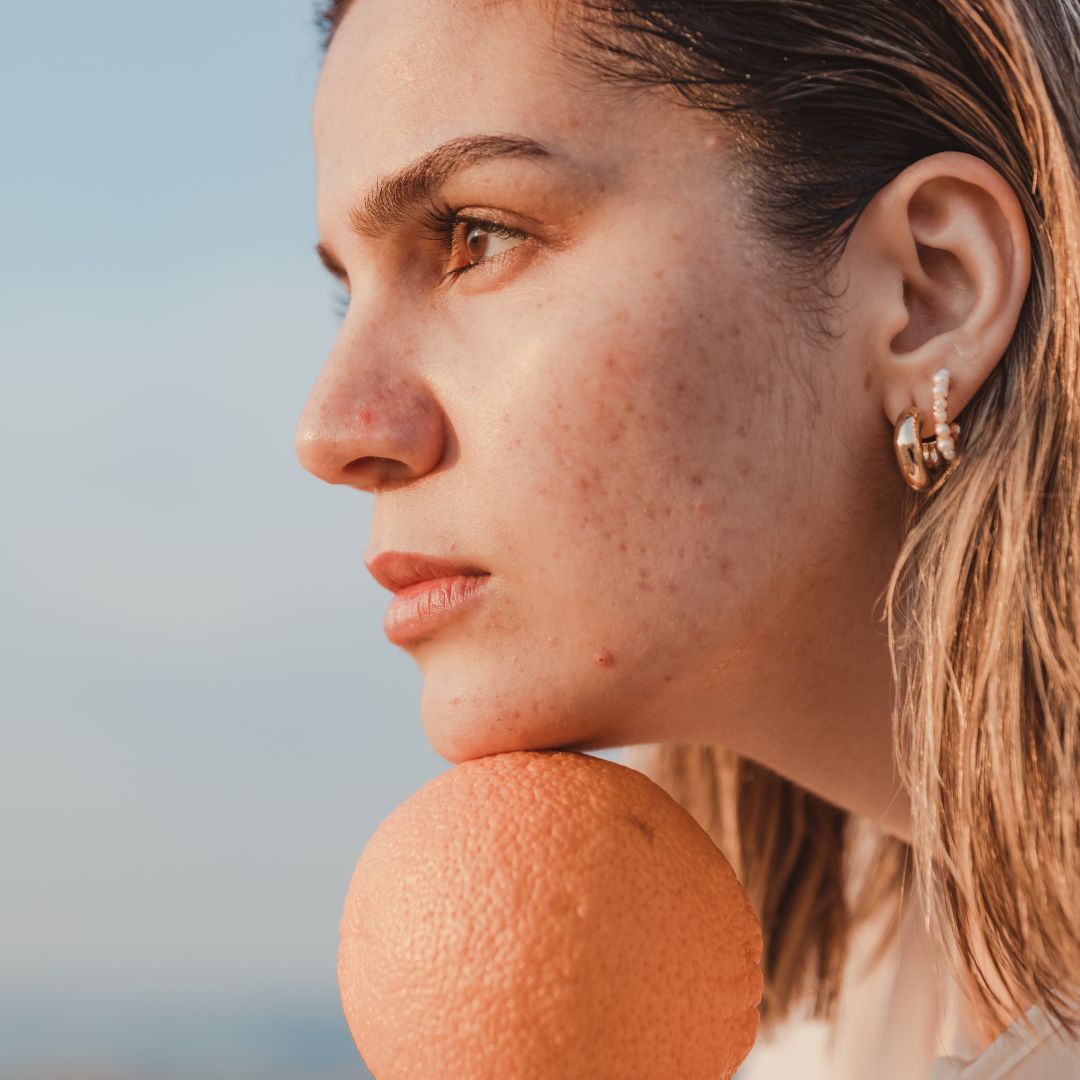

Ernährung bei Akne: Welche Lebensmittel sind schlecht für die Haut?

Diet and Acne: Which Foods Are Bad for Your Skin?

You've heard that diet can help achieve beautiful skin? And you've experienced for yourself that certain foods cause inflamed and blemished skin? That's exactly right! The right diet is one of the key factors for clear and healthy skin.

In this article, you'll learn...

...which foods you should definitely avoid and why.

...which foods support your healthy skin.

...which dietary supplements can lead to acne flare-ups.

Contents:

Which foods are bad for the skin?

What role does glycemic load play in acne?

Which dietary patterns are bad for the skin?

What diet is healthy for the skin?

Which nutrients are good for the skin?

What else is good for my skin?


Skin health depends on many factors. Skincare routine, cosmetics, stress, nicotine, environmental influences, hormonal status, etc. have a direct impact on the appearance and integrity of the skin. Some things cannot be influenced, while we have more influence over others. For example, our diet in the case of acne.

Which foods are bad for the skin?

In fact, many scientific studies examine the link between diet and the severity of acne. Above all, foods or dietary patterns that exacerbate the severity of acne have been identified. Generally speaking, this is anything that causes blood sugar to spike, i.e., anything with a high glycemic load. This includes foods that are high in carbohydrates—especially simple sugars—but contain little to no fiber, e.g., white flour products, white rice, syrup, or highly processed products such as baked goods. Dried fruit and ready-made meals also have a high glycemic load.

Tip: If you want to check your diet for glycemic load, you can find helpful food lists for glycemic index and glycemic load online.

Glycemic load as a trigger for acne

The trigger for acne caused by glycemic load is insulin-like growth factor (IGF-1). This is released with insulin during carbohydrate metabolism. IGF-1 increases the release of androgens such as testosterone and also increases the conversion of androgens to dihydrotestosterone (DHT). DHT, in turn, affects the sebaceous glands and promotes sebum production, which leads to clogged pores, skin blemishes, and inflammation [1].

Pimples from milk? Unhealthy dietary patterns promote acne

In addition to and/or because of the glycemic load, some food groups should be enjoyed with particular caution if you are prone to acne. There is a very strong link to the consumption of dairy products, including milk chocolate. So pimples from milk are not just a myth! You can also observe a worsening of the skin with sugary drinks, fatty and high-sugar foods, snacks and fast food, as well as a low intake of fruit and vegetables. Certain preparation methods such as frying and pan-frying can also turn a healthy food into a potential risk factor for acne. And as always, alcohol and nicotine do not help [2, 3, 4, 5 ]!

What does a diet for healthy skin look like?

Acne is associated with inflammation, sometimes severe. For this reason, an anti-inflammatory diet is recommended. This is usually a plant-based or purely plant-based diet that is low in or free from animal fats and proteins. In addition, it is useful to incorporate foods with high antioxidant potential into your daily diet. Inflammation means high oxidative stress, which damages cells. Certain foods are particularly highlighted, such as green tea, pomegranate, herbs, garlic, and onions. Fiber seems to play a very important role. So go for vegetables, whole grains, nuts, and the like [4,5]!

Which nutrients are good for the skin? Eat your Veggies!

In addition to dietary patterns and a few specific foods, certain nutrients are particularly well-researched regarding their benefits for healthy skin. In addition to an adequate protein intake for building skin structures, polyunsaturated fatty acids are an especially important part of the diet for acne due to their anti-inflammatory effect.

Vitamin D, vitamin C, vitamin A, coenzyme Q10, copper, zinc, iron, and selenium are micronutrients that you should pay special attention to. Top foods in this regard: nuts!

Carotenoids (lycopene), curcumin, polyphenols, and flavonoids (resveratrol or pycnogenol) are secondary plant compounds and promote healthy skin. You can find carotenoids in many fruits and vegetables, e.g., carrots, apricots, or pumpkin. Tomatoes are particularly rich in lycopene. Curcumin is the active ingredient in turmeric. You can find polyphenols in green tea and chocolate, among other things, and red to blue fruits and vegetables are particularly rich in flavonoids (e.g., berries or grapes)[4,5].

What else can I do for beautiful skin? Stay hydrated!

Adequate fluid intake is extremely important, even for the skin! But please avoid sugary drinks; try to meet your fluid requirements with water! Our health also depends on the health of our microbiome, i.e., the gut bacteria. The diet described above is optimal for supporting the gut bacteria. You can give your gut an extra boost with a probiotic course [4,5]!

If your skin problems are very strongly cyclical and increase especially in the luteal phase and before your period, taking chasteberry supplements may be useful for you [6].

gesunde versus ungesunde Lebensmittel, ernährung bei akne, was essen für reine haut

Did you know that?

What to eat for clear skin? This is what the research says*

Dos:
Green tea, pomegranate, fiber, herbs, garlic and onions, lots of water, probiotics, chasteberry
Macronutrients: polyunsaturated fatty acids, proteins
Micronutrients: Vitamin D, Vitamin C, Coenzyme Q10, Copper, Zinc, Iron, Selenium
Secondary plant substances: carotenoids, lycopene, retinol, curcumin, polyphenols, flavonoids (resveratrol, pycnogenol)

Don'ts:
Dairy products, milk chocolate, sugary drinks, high-fat foods, high-sugar foods, snacks and fast food, highly processed and highly heated (fried, fried) foods, little fruit and vegetables, alcohol

Be careful with: dietary supplements with Vit B6, Vit B12, iodine or whey

*Explanations and sources in the text

Did you know that?

Acne caused by nutritional supplements?

It is also interesting that some dietary supplements increase the formation of acne. In addition to high doses of vitamin B6 (especially in combination with vitamin B12), vitamin B12 and iodine, products containing whey can also lead to acne flare-ups. Dairy products have long been suspected of interfering with the hormonal cycle through growth factors. Products containing whey, which are often used as protein supplements in sports, often contain the whey amount of 6-12 liters of milk [7].

natural: 100%- Natürliche Zutaten- Vegan-
Glutenfrei- Laktosefrei- Ohne Zusatzstoffe

clear skin Foamer und clear skin Creme, daneben angeschnittene Aloe vera und Kurkuma

Can we recommend something to you?

clear skin x cycle

The health of your skin depends on many factors - some of which you can influence! A healthy, skin-friendly diet is a first step that is not only good for your skin. But skin care products and care routines also play a big role for your skin. With our clear skin range we have developed a small revolution in acne care. The innovative OLT ® , finely tuned active ingredients and a super mild and anti-allergenic formulation make clear skin the only products you need to relieve your acne problems.

fenou clear skin Creme und Reinigungsschaum, creme bei akne, reinigung bei akne

Can we recommend something to you?

clear skin x cycle

The health of your skin depends on many factors - some of which you can influence! A healthy, skin-friendly diet is a first step that is not only good for your skin. But skin care products and care routines also play a big role for your skin. With our clear skin range we have developed a small revolution in acne care. The innovative OLT ® , finely tuned active ingredients and a super mild and anti-allergenic formulation make clear skin the only products you need to relieve your acne problems.

porträt zweier weiblich gelesener modells mit akne, ein gesicht seitlich angeschnitten, das andere modell schaut in die kamera. Auf der Wange ist creme aufgetragen.

Still curious?

How to recognize hormonal acne!

Do you think your acne could be hormonal? Do your skin blemishes only appear during certain phases of the cycle? Or have you just stopped taking the pill and have had skin problems ever since? Could be hormonal skin problems. Find out what hormonal acne is, how to recognize it, and most importantly, how to get rid of it!

porträt zweier weiblich gelesener modells mit akne, ein Gesicht seitlich angeschnitten, das andere modell schaut in die kamera. Auf der Wange ist creme aufgetragen.

Still curious?

How to recognize hormonal acne!

Do you think your acne could be hormonal? Do your skin blemishes only appear during certain phases of the cycle? Or have you just stopped taking the pill and have had skin problems ever since? Could be hormonal skin problems. Find out what hormonal acne is, how to recognize it, and most importantly, how to get rid of it!

For Further Reading

References

[1] Rao A, Douglas SC, Hall JM. Endocrine Disrupting Chemicals, Hormone Receptors, and Acne Vulgaris: A Connecting Hypothesis. Cells. 2021 Jun 9;10(6):1439
[2] Penso L et al. Association Between Adult Acne and Dietary Behaviors: Findings From the NutriNet-Santé Prospective Cohort Study. JAMA Dermatol. 2020 Aug 1;156(8):854-862
[3] Daszkiewicz M. Associations between diet and acne lesions. Rocz Panstw Zakl Hig . 2021;72(2):137-143.
[4] Muzumdar S, Ferenczi K. Nutrition and youthful skin. Clin Dermatol. 2021 Sep-Oct;39(5):796-808
[5] Cao C et al. Diet and Skin Aging-From the Perspective of Food Nutrition. Nutrients. 2020 Mar 24;12(3):870
[6] Nasri H et al. Medicinal Plants for the Treatment of Acne Vulgaris: A Review of Recent Evidence. Jundishapur J Microbiol. 2015 Nov 21;8(11):e25580.
[7] Zamil DH, Perez-Sanchez A, Katta R. Acne related to dietary supplements. Dermatol Online J. 2020 Aug 15;26(8):13030/qt9rp7t2p2.

fenou supports acceptance and equality in society!

When we talk about “women,” we mean anyone who identifies as a woman and/or has female sex organs from a biological perspective. However, our work is based on the sex hormones that circulate in the human body when a uterus and/or ovaries are present. Therefore, our articles and products may not apply to you, even though you identify as a woman. We are also aware that not everyone with female sex organs identifies as a woman. We also want to reach out to people who do not identify as female (such as transgender, intersex, and non-binary people) with our informative posts and by no means want to exclude them. We use gender-neutral language in our posts whenever possible and are continuously educating ourselves. So please feel free to contact us if you have constructive suggestions for more inclusive language!