



- Author: Melanie Dell’Oro
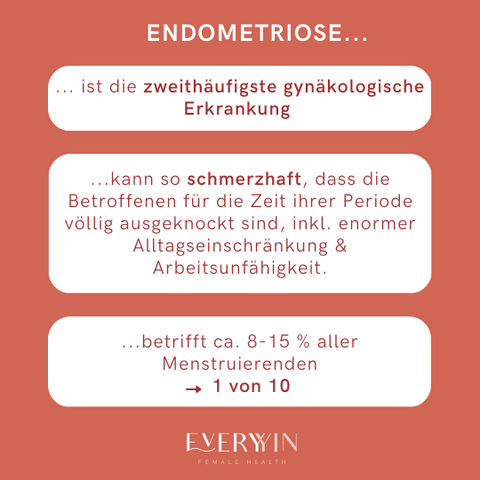
Because although endometriosis is the second most common gynecological disease after myoma, many people cannot make sense of the term, which is reflected in the sparse evidence, long periods of diagnosis, frequently undetected cases, and great lack of understanding when it comes to the topic of period pain. Because endometriosis can be very painful, so painful that those affected are completely knocked out during their period, including being unable to work. So it is very important to raise awareness of this disease!
What exactly is endometriosis?
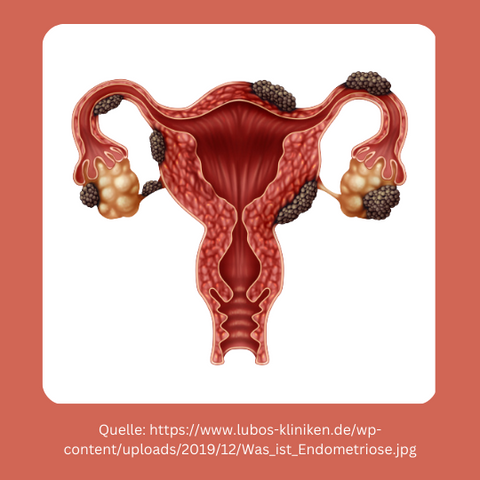
In endometriosis, benign growths of endometrial-like tissue occur, but outside the uterine cavity. Instead, these endometriosis lesions grow in adjacent tissues and organs such as the pelvic area, ovaries, fallopian tubes, or bowel, or in deep uterine tissue. In principle, growths are possible in any body tissue; endometriosis lesions have even been found in the brain.
Endometriosis occurs in about 8-15% of all menstruating people, and it most commonly occurs at the age of 35-45 years.
Exactly how endometriosis develops is not yet fully understood, but there are various theories. At least over 40 gene loci have now been discovered that are associated with the development of endometriosis. Endometriosis is therefore genetically determined. As additional risk factors for the onset of the disease in women, various circumstances have been observed that are unfortunately hardly or not at all influenceable. Short cycle, menarche before teenage years, longer fertility (menarche to menopause), fewer pregnancies, shorter breastfeeding period – all factors that can hardly or not at all be influenced.
In addition, there are reports of endometriosis lesions in men or people without a uterus. This opens up further causal variables and offers a great opportunity to understand the disease in the future.
What symptoms does endometriosis bring?
The endometriosis lesions grow just like the actual uterine lining during the menstrual cycle - and can also bleed during the period. The result can be cramp-like pain depending on the location, up to unconsciousness, as well as chronic abdominal and back pain. If the blood from the bleeding tissues cannot drain away, blood-filled cysts form, the so-called chocolate cysts. The severe pain is exacerbated by the increased oxidative stress caused by the inflammatory reactions in the endometriosis lesions. The consequences of endometriosis are scarring, organ damage, or chronic inflammation.
A very common accompanying symptom of endometriosis is infertility. In fact, this is also often the reason why endometriosis is diagnosed in the first place. 40-60% of menstruating people who want to become pregnant do not get pregnant due to endometriosis - perhaps previously undetected.
However, the range of symptoms of endometriosis is as colorful as a bouquet of flowers. In addition to pain in the chest and abdominal area as well as in the genital organs, symptoms such as migraine, sleep disorders, chills, urinary tract problems, digestive problems, allergies, or nutrient deficiencies can originate from endometriosis. And the list is even longer. Crazy, right? This is probably due to the fact that the affected gene loci responsible for endometriosis are associated not only with pain perception but also with (chronic) pain syndromes such as migraine, headache, back pain, and also asthma or osteoarthritis.
What can be done about endometriosis?
In fact, you may medically have endometriosis, but experience no symptoms at all. In this case, there is no need for action. But if you have symptoms and endometriosis has been diagnosed in you, you will certainly have to deal with treatment options soon. And good advice is important here.
For the treatment of endometriosis, various options are considered, some of which may have quite a few side effects or require an invasive procedure. Here you can get detailed advice from your gynecologist.
Fortunately, there are also many other factors that you can influence yourself to alleviate your endometriosis symptoms. As so often, diet, lifestyle, exercise, and stress management are at the top of the list.
We would be happy to go into this in a little more detail in a second article. So if you would like to know which options are available to you for the treatment of endometriosis and whether and how you can influence your symptoms through diet and lifestyle, please continue reading our article “ Endometriosis - Diet, Lifestyle, Therapy”
Where can I find information about endometriosis?
If you would like to learn more about the disease of endometriosis, there are various counseling centers and associations that have taken up this topic. There you can also find contact with self-help groups, because often just talking to other affected people is comforting and helpful. You can find contacts to such groups and doctors who specialize in endometriosis, for example, at the Endometriosis Association . There is also a counseling hotline where you can get information and advice.
In addition, the EndoMarch takes place every year in March. In this context, many organizations organize events on the topic of endometriosis. You can find an overview on the EndoMarch website.
The Endo App not only offers you countless pieces of information about endometriosis on its website and Instagram channel, but also a useful tool in the app for monitoring your symptoms. In addition, the Endo App universe also offers an ongoing podcast on all questions surrounding endometriosis.