


- Author: Melanie Dell’Oro
Since it is generally recognized that nutrition has an important influence on a wide range of diseases, chronic conditions are also always carefully examined to see whether and how nutrition affects the clinical picture.
In the case of endometriosis, there is agreement that a tailored diet can help improve well-being and thus reduce symptoms. Some nutrients are suspected of at least increasing the risk of disease development and the intensity of endometriosis pain.
Plant-based, fresh and balanced
Generally, a plant-based diet rich in fruit, vegetables and whole grains, and low in sugar and animal fats, is highly recommended. Some foods and nutrients have been examined in more detail.
For example, it has been found that meat consumption fuels inflammatory reactions, has a negative effect on the hormonal balance, and that the histamine contained in it intensifies uterine pain.
The consumption of gluten is controversially discussed. As of today, there is no link between gluten consumption and the risk of endometriosis. However, a gluten-free diet can lead to pain relief in some people. So you can certainly try it. If it has no effect on you and you don't have any other problems with gluten, we recommend that you continue to include gluten-containing whole grains in your diet for nutrient supply.
In the case of trans fatty acids, such as those found in highly processed and high-heat foods, it has been shown that they increase the risk of endometriosis. The effect of trans fatty acids was particularly strong in combination with proteins and other fats, while simultaneously consuming low amounts of carbohydrates - basically a diet rich in highly processed junk food with few fresh plant-based foods and whole grains, as unfortunately occurs too often in Western countries.
Interestingly, the amount of fat had no effect in a normocaloric diet, i.e., one adapted to your energy requirements. However, the type of fat consumed was decisive. Palmitic acid performed particularly poorly here.
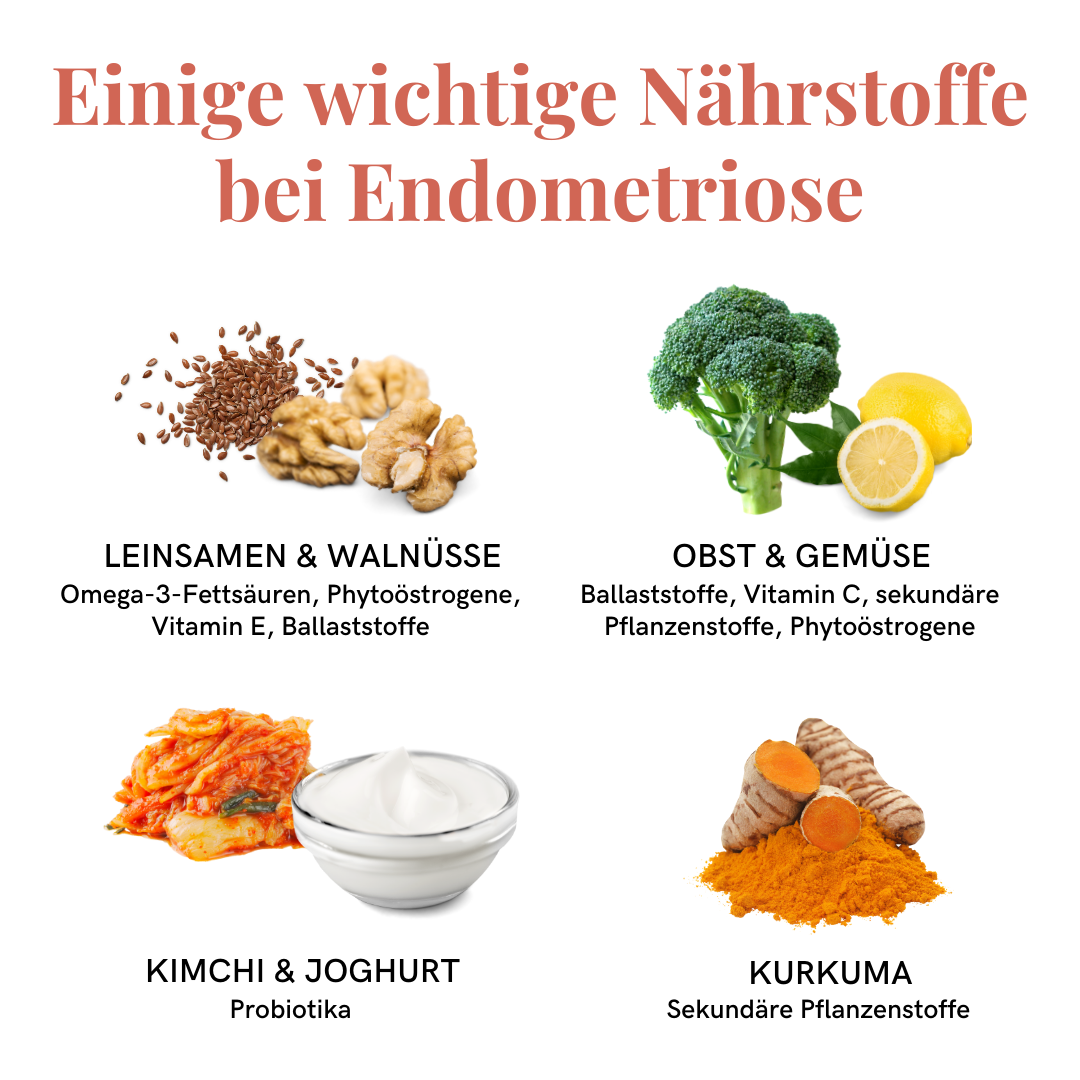
Important nutrients for endometriosis
On the other hand, a diet rich in anti-inflammatory omega-3 fatty acids, which can be found in high amounts in, for example, linseed oil, walnuts and algae, is beneficial. It has been observed that they have a positive effect on the hormonal balance.
Fruit and vegetables contain a wide variety of secondary plant compounds and sometimes phytoestrogens, and thus have the well-known antioxidant, anti-inflammatory and immune-strengthening effects that can alleviate endometriosis symptoms. However, you should make sure to buy organically grown fruit, as one study has shown that pesticides have the opposite effect.
For the mineral magnesium, a relief of symptoms could be observed. Magnesium-rich foods include, for example, whole grain products, nuts, legumes and certain mineral waters.
Vitamin C and vitamin E could also achieve pain reduction. You can find vitamin C in large amounts in, for example, citrus fruits, cabbage, sea buckthorn or rose hips. Vitamin E, as a fat-soluble vitamin, is mainly contained in nuts, oilseeds and vegetable oils.
The phytoestrogens contained in plant-based foods are supposed to have an estrogen-balancing effect. In addition to flavonoids and stilbenes, lignans are particularly well-researched. You can find these, for example, in flaxseed. A remarkable representative of flavonoids is quercetin. Quercetin is contained in high amounts in, for example, apples and onions.
Other secondary plant compounds that have shown an effect in endometriosis therapy are curcumin from turmeric
Probiotics and prebiotics
Since endometriosis often also affects bowel function, support here cannot hurt. On the one hand, you can take beneficial gut bacteria in the form of probiotic foods such as sauerkraut, kimchi, yogurt, or as a powder. On the other hand, you can make your digestion easier by taking prebiotics. These regulate bowel movements and at the same time feed the good bacteria in the gut. Prebiotics are mainly fiber, which occurs in fruit, vegetables, whole grains, nuts and legumes. To acutely support digestion, you can take, for example, linseed or psyllium husks.
Dairy products and endometriosis
Usually, we recommend that you reduce or completely avoid the consumption of animal-based foods. However, for the sake of completeness, we would like to point out that a high consumption of dairy products could reduce the risk of at least endometriosis in studies. This may be due to the good supply of calcium, vitamin D and magnesium, so it should also be achievable through a balanced, plant-based diet with the above-mentioned foods. Vitamin D supplementation is quite useful anyway, so feel free to discuss this with your family doctor.