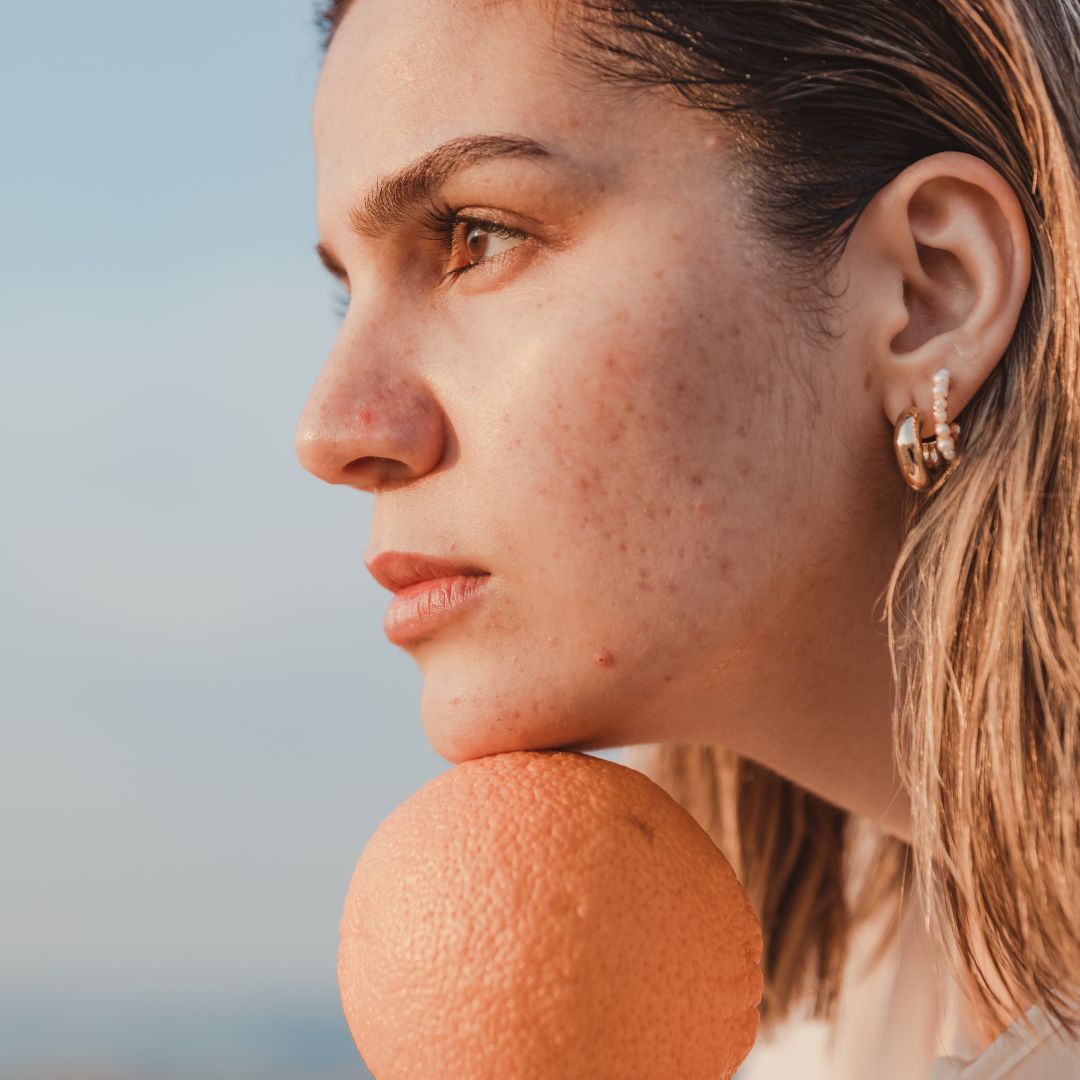



Hair loss after childbirth is one of the women's health topics that is extremely poorly researched. Many women report losing more hair after giving birth. The rosy, clear skin that many pregnant women enjoy is also often a thing of the past after childbirth. Instead: skin blemishes and pimples after pregnancy or in the last trimester. One of the causes is the drop in estrogen after childbirth.
Estrogen during pregnancy
During pregnancy, various hormones are needed to maintain the pregnancy, nourish the unborn child, and prepare the mother's body for childbirth and the subsequent breastfeeding period. Estrogens also play a crucial role. During pregnancy, estrogens are mainly produced by the placenta.
During pregnancy
- estrogen increases blood flow to the uterus and stimulates circulation to supply the child with sufficient oxygen
- estrogen promotes increased blood formation and water retention
- estrogen increases serotonin production and thus influences the pregnant woman's mood
- estrogen prepares the breasts for breastfeeding by forming breast tissue and the pelvic joints and pubic symphysis for childbirth
- towards the end, high estrogen levels stimulate the production of prostaglandins, which causes the cervix to soften and oxytocin receptors to develop [1, 2]
During pregnancy, estrogen levels steadily increase and reach their peak in the last trimester. After childbirth, estrogen levels drop again.
Effect of estrogens on hair
Hair follicles have numerous estrogen receptors. Estrogens have a stimulating effect on hair growth. Due to high estrogen levels during pregnancy, hair follicles remain in the growth phase longer. This leads to less hair loss than usual, making the hair appear fuller and stronger.
After childbirth, estrogen levels drop again, the effect on the hair follicles decreases, and the "overdue" follicles enter the resting phase - this leads to visibly increased hair loss about 2-4 months after childbirth. In addition, there is birth stress, which is accompanied by elevated cortisol levels. Unlike estrogens, cortisol tends to have a damaging effect on hair follicles and promotes the transition into the resting phase and thus increased hair loss [3].
Hair loss after childbirth and during breastfeeding
Increased hair loss is therefore only indirectly related to breastfeeding, but is rather a natural consequence of hormonal fluctuations during pregnancy and the time after. Hair loss, known in technical jargon as "postnatal effluvium", is usually completely normal and affects about 91.8% of mothers. 73.1% of them report that they suffer from it [3].
Hair loss begins about 2-4 months after childbirth. It manifests diffusely, meaning it does not occur in any specific pattern on the head. After 3-6 months, hormone levels normalize. However, due to the additional stress of having a baby and inevitable sleep deprivation, increased hair loss can occur for up to a year after childbirth or even longer.
Other causes of hair loss after childbirth
In addition to estrogen deficiency, iron deficiency due to blood loss during childbirth or an imbalance of thyroid hormones due to pregnancy can also promote hair loss. A medical examination is advisable here. Androgenetic hair loss due to the hypersensitivity of the hair follicles to DHT, the breakdown product of testosterone, can also emerge or be exacerbated by estrogen deficiency after pregnancy, as testosterone levels also increase towards the end of pregnancy.
Nutrient deficiency during breastfeeding
Another problem that you are certainly not alone with: adequately meeting the nutrient requirements. Let's be honest, the time after childbirth is exhausting, you are more controlled by others than usual, and healthy eating is often more of a wish than a reality. Further down, we have put together a few tips for your diet that are intended to help you take in many nutrients in the simplest way possible.
But did you know that a nutrient deficiency can creep in even before pregnancy? The birth control pill is one of the risk factors. It is a major nutrient thief, so that a deficiency in certain micronutrients can occur even during its use. If you then stop taking the pill and quickly become pregnant without paying attention to replenishing the nutrient stores, you may enter pregnancy with a nutrient deficiency. Pregnant women have increased nutrient requirements; you should pay particular attention to iron (twice the requirement!), zinc, vitamin B6, and folic acid [4]. Except for iron, these are precisely the micronutrients whose requirements are increased when taking the pill and whose deficiency can lead to hair and skin problems after pregnancy, among other things.
Tips for hair loss after childbirth
We know from our own experience that when you have a baby or toddler, you usually cannot do what you would like to do. And instead of hair care, 10 minutes of rest or an undisturbed afternoon nap move right to the top of the priority list. Nevertheless, we want to give you some ideas of what you can do for yourself to help with hair loss during this time to the best of your abilities. See what you can do, following the motto "You can do anything, you don't have to do anything".
This helps with hair loss after childbirth and hair loss during breastfeeding
- Allow yourself rest: Do you have someone who can take your baby for a walk around the block for an hour? Or can someone rock your baby to sleep so that you can enjoy a bath or a longer shower? Such little oases without the baby can reduce your stress level a bit. Maybe you can even meditate for a few minutes? It is helpful here if you do not hear your child.
- Balanced diet: A healthy diet during breastfeeding is important for you and the baby anyway. But it is also clear that cooking and planning meals are not necessarily top priorities when you are busy with a child around the clock. Can you have someone cook for you and tell them which foods would be good for you right now (you will find a practical overview below)? Or can you manage to prepare meals for a week or have them prepared for you? If you rarely get around to eating, try to make sure that these meals are rich in micronutrients for skin and hair (zinc, biotin, iron, vitamin B6).
- Suitable hair care: Even if unwashed hair may be your constant companion during this demanding time, you can especially choose products for hair care that have a favorable effect on hair loss. Perhaps you already avoid conventional products and switch to natural cosmetics. Look for products with ingredients that stimulate blood circulation (e.g., rosemary), stimulate hair growth (e.g., saw palmetto), and inhibit the conversion of testosterone to DHT (e.g., nettle, horsetail, green tea). Be careful with products like minoxidil and always discuss the use of such medicinal substances with your gynecologist beforehand.
- Stimulate blood circulation: Head massages - ideally with stimulating and vitamin-rich hair tonic or hair serum - are not only little islands of relaxation in everyday life, but can also stimulate hair growth through improved blood circulation. Maybe someone can massage your head while you are breastfeeding or when the baby has fallen asleep on you again and you cannot move anyway?
- Avoid pulling on the hair: Certain hairstyles can also promote hair loss. Especially very tight, severe braids or knots pull on the hair root and promote faster loosening from the follicle. Therefore, wear your hair as loosely as possible - it saves time and nerves anyway!

Food for breastfeeding that is great for skin and hair and easy to prepare:
- Nuts and dried fruit: Always keep a bowl with a colorful mix at your postpartum station or where you breastfeed.
- Salads: Salads with a grain base (quinoa, amaranth, wild rice, oats, spelt) can be prepared very well in several portions. Ensure variety with green bell pepper, broccoli, carrots, lamb's lettuce, garlic, avocado, or spinach. Potato salads can also be prepared and varied excellently for a week.
- Legumes: Cook, for example, a large pot of chili sin carne or red lentil soup with carrots in advance and freeze it in portions.
- Kitchen herbs: Have fresh herbs on the windowsill or use the frozen version. Sprinkle a good handful of fresh herbs over all your meals.
- Wild herbs: Do you have a garden or a forest nearby? Use daily walks with the baby to collect wild herbs such as nettle, dandelion, dock, or sorrel and add them fresh to your prepared salads or stews.
Of course, pay attention to what you and your baby tolerate well during breastfeeding. If you cannot eat something, then take more of the other.

These foods should be at the very top of your shopping list if you want to alleviate hair loss after childbirth or pimples after pregnancy. They are rich in vitamin B6, zinc, magnesium, and/or iron [4]:
- Nuts, dried fruit
- Potatoes, broccoli, carrots, lamb's lettuce, garlic, green bell pepper, Brussels sprouts, herbs, avocado, wild herbs (such as dandelion, nettle, dock, sorrel), spinach
- Legumes, especially soy
- Grains and pseudograins, millet, oats
Pimples after pregnancy - What's going on with that?
This problem is also not a very relevant topic for research. According to a survey, 21.6% of women suffer from skin problems during and after pregnancy. Pimples and skin blemishes occur especially in the last trimester of pregnancy. Here, the testosterone level, which increases with advancing pregnancy, could play a role above all. Testosterone causes increased sebum production - for sensitive skin, this unfortunately does not lead to the desired baby glow, but to skin blemishes and acne [5].
The sustainable solution is also here: Drink plenty, reduce stress, sleep enough - none of these are minor things, let alone possible with advancing pregnancy or especially with a baby. One comfort: The symptoms usually subside on their own after pregnancy or as soon as the hormones have balanced out.
And for first aid, if you have skin blemishes or pimples during pregnancy, you can consider the following tips:
- Top rule: Do not squeeze!
- Instead, dissolve skin blemishes with water vapor, e.g., with a chamomile infusion
- Cool painful inflammations with ice cubes, frozen teas made from daisies or chamomile are also great
- Soothe affected areas with anti-inflammatory tinctures from the home medicine cabinet, e.g., apple cider vinegar, lemon juice, or tea tree oil