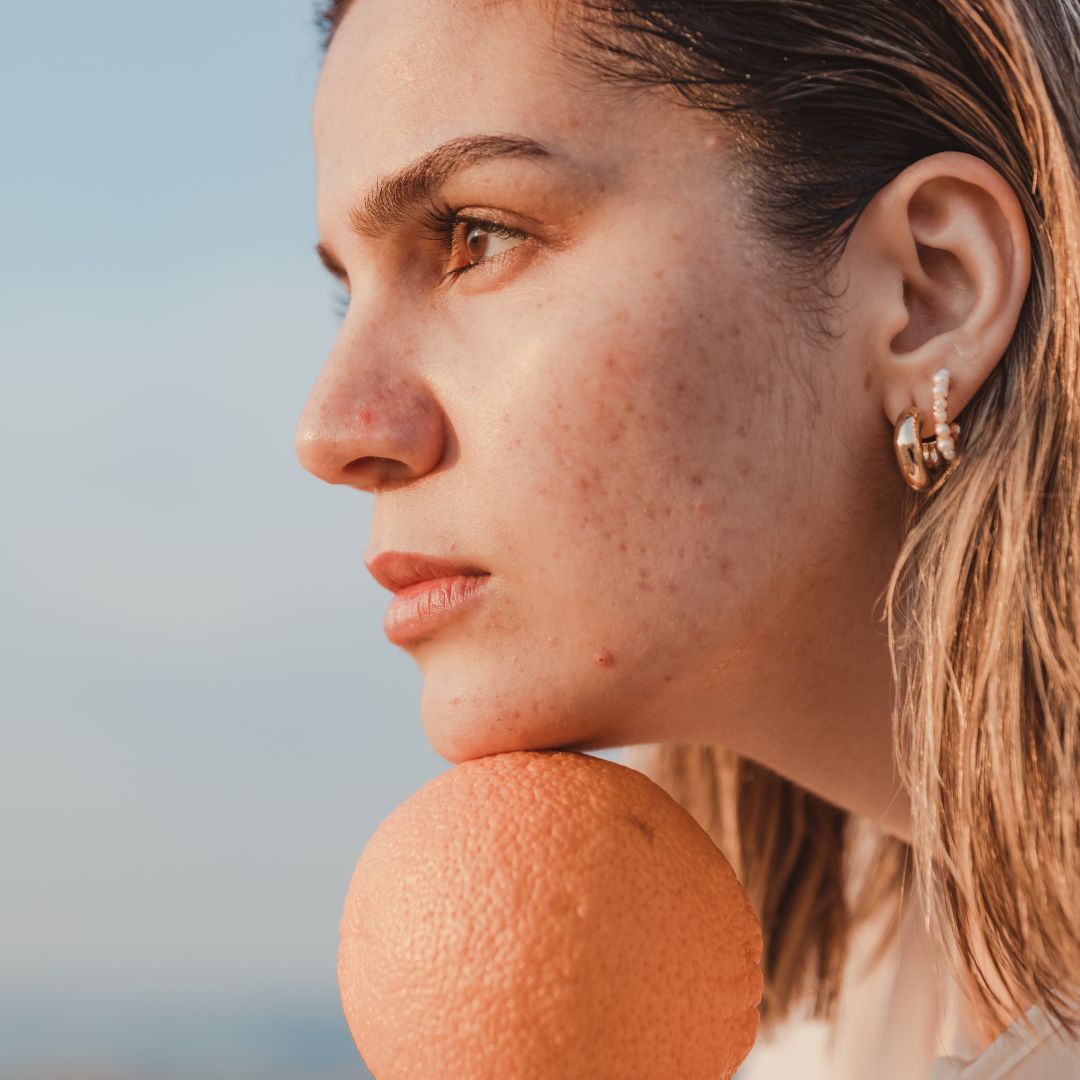



Acne is a skin condition with various subtypes. With a prevalence of 9.4%, acne vulgaris was even eighth among the world's most common diseases in 2021 [3]. Acne vulgaris affects about 85% of 12- to 15-year-olds.
Acne - in this case acne tarda - is also occurring increasingly in adults. About 40% of adult women* are affected. Those affected are also getting older and older - nothing like “only in adolescents”. The average age for the diagnosis of so-called adult acne (also AFA, English adult female acne) was 32.5 years between 2016 and 2018 [4]. In 1984 it was still 20.5 years, in 1994 26.5 years [5]. While adolescents are mainly affected by males, acne occurs more frequently in females in the adult variant [6,7].
The causes of adult acne are diverse. For example, hormones (e.g., sex or stress hormones) can trigger acne, genetic factors may underlie it, or an unfavorable diet may favor the development of acne. Certain bacteria, medications, and incorrect or excessive skincare are also being discussed as promoting acne [7].
How can I recognize adult, hormonal acne?
Adult acne occurs from about the age of 20. At the same time, it is not necessarily required that you have already suffered from acne during puberty. Acne vulgaris can indeed persist, thus accompanying you from puberty into adulthood, but acne can also occur only when you are already an adult. The average age for the diagnosis of acne tarda is about 32-33 years [4,7,8].
You can recognize adult hormonal acne by the frequency of its occurrence (some women with hormonal adult acne have flares only shortly before menstruation) or also by its external appearance.
What symptoms does adult acne have?
The symptoms of acne vulgaris and acne tarda are similar. Above all, comedones, pustules, papules, and purulent pimples occur. In adolescents, these are mainly located in the T-zone, i.e., on the forehead, nose, and upper chin area. You can recognize adult, hormonal acne because it shows up more in the U-zone: on the cheeks, around the mouth, and on the lower chin area [7, 9]. The frequency of comedones decreases, but nodules increase. In 49% of those affected, consequences such as scars or pigment spots remain [5].

What causes adult, hormonal acne?
Just like acne during puberty, adult acne can also be triggered by an imbalance in the hormone balance. However, not only sex hormones are decisive here, but also hormones that are associated with carbohydrate metabolism or stress.
Acne caused by sex hormones
Acne tarda is very frequently caused by an excess of androgens. In a study with 835 female participants, only 43.47% had an unremarkable androgen level. Androgens are broken down by 5-alpha-reductase into breakdown products (including 5α-DHT), which promote sebaceous gland development. Due to the increased sebum production, the pores become clogged and acne develops [10]. For this reason, patients with PCOS, which is associated with elevated androgen levels, very frequently suffer from adult acne and skin problems.
In addition to a measurable androgen excess, however, a deficiency or drop in estrogens can also exacerbate acne. Estrogens can balance the effects of androgens. If there is a drop or imbalance in the estrogen balance, e.g., in the luteal phase before menstruation or during pregnancy and breastfeeding, acne formation can occur [3].
Hormonal acne is also a classic symptom of post-pill syndrome, which can occur after discontinuing hormonal contraceptives. Due to the suppression of androgen metabolism, an excess of androgens can occur after the hormones are gone, the so-called androgen rebound (it may make sense to counteract this already during the intake of the pill or during the discontinuation. A good companion during this time could be our pill-discontinuation-bundle including a guide for you!).
Acne caused by an unfavorable diet
In many studies, a connection between certain dietary patterns and the development or severity of acne has been found. One of the causes for this is the insulin-like growth factor (IGF-1). This is released in carbohydrate metabolism with insulin. A diet with a high glycemic load, especially with highly processed, carbohydrate-rich foods with a low fiber content, leads to an increased release of IGF-1. IGF-1 increases the release of androgens on the one hand and also increases the conversion of androgens to 5α-DHT [3].
Acne caused by stress
The body reacts to internal and external stressors with the release of stress hormones such as corticotropin-releasing hormone (CRH) and cortisol. Both hormones influence the sebaceous glands of the skin by increasing sebum production and promoting the conversion of androgens. In studies with students, it was found that the severity of acne worsened during stressful phases [3].
Women* are exposed to a double or triple burden nowadays. In addition to caring for children and/or the household, many women* have a full-time job. And from the ideals predetermined by the media, men*, and society regarding body, appearance, and health, very few of us can truly free ourselves. Many women* juggle all sorts of roles - stress is preprogrammed. The term Rushing Woman was coined for this phenomenon. You can read in the magazine what effects this has on health.
Further reasons for adult acne
Various other triggers of acne are being discussed, and there are certainly always connections between the individual factors. For example, stress or a pro-inflammatory diet can contribute to inflammation. Cytokines and inflammatory factors are closely linked to acne symptoms [3]. The disruption of the skin barrier - and the resulting water loss - is both a consequence and a cause of acne. Sleep disorders, various medications, the microbiome, and improper skincare are also discussed as triggers and exacerbators of adult acne [2].
What to do about hormonal acne in adults?
Adult acne tolerates external products less well [2]. If the cause is a hormonal imbalance, this can only be solved internally. An optimally coordinated dietary supplement is useful, for example beauty x cycle for androgen excess. And especially with causes that cannot be cured, you should place value on a holistic therapy of your acne. Skincare, nutrition, and lifestyle offer promising starting points. However, in case of very severe symptoms or great distress, you should definitely have medical treatment clarified. For this, various medications such as antibiotics, retinoids, or substances like azelaic acid are available [2].
What to do about adult or hormonal acne? -Gentle skincare
Aggressive peels, occlusive creams, or unsuitable soaps can irritate your skin additionally. Gentle, non-comedogenic cleansing products for daily facial care are better. For acne, your care products should meet the following requirements:
- Promotion of skin regeneration, e.g., through the Ortholamellar Technology (OLT®). This mimics the natural structure of the skin and supports its regeneration. OLT®-based products contain active ingredients that stimulate the body's own ceramide production and thus strengthen the skin barrier sustainably.
- Moisturizing: Substances such as hyaluronic acid, glycerin, and ceramides contribute to the moisture content and the building of a healthy barrier.
- Anti-inflammatory: Ingredients such as salicylic acid, niacinamide, or glycyrrhizic acid act anti-inflammatorily and promote healing.
- Antimicrobial: Active ingredients such as salicylic acid or sodium anisate help to inhibit harmful bacteria and harmonize the skin microbiome.
- Antioxidant: Vitamin E, curcumin, or troxerutin protect the skin from oxidative stress and environmental free radicals.
- Sebum-regulating: Ingredients such as niacinamide or red clover can control excessive sebum production and prevent the clogging of pores.
Nutrition - What can I pay attention to with adult and hormonal acne?
There are very many studies that deal with the effect of foods or dietary patterns on skin health and complaints such as acne.
Relatively certain are factors that promote the development of acne. These include a higher consumption of dairy products including milk chocolate, sugary drinks, fatty and sugar-rich foods, snacks, and fast food, as well as a low intake of fruit and vegetables [11, 12].
It is recommended to pay attention to an anti-inflammatory diet with many foods with antioxidant effects. Especially green tea, pomegranate, fiber, herbs, garlic, and onions are repeatedly mentioned because of their beneficial secondary plant compounds for skin health.
Individual macronutrients, micronutrients, and secondary plant compounds are well studied regarding their benefits for the skin. These include:
Macronutrients: polyunsaturated fatty acids, proteins
Micronutrients: Vitamin D, Vitamin C (also externally), Coenzyme Q10, copper, zinc, iron, selenium
Secondary plant compounds: carotenoids (also externally), lycopene, retinol (Vitamin A, also externally), curcumin, polyphenols, and flavonoids such as resveratrol or pynogenol
You should take these nutrients daily in their natural form in foods. However, if necessary, you can also take them as a dietary supplement after consulting a doctor. Some of the nutrients are also quite useful as an ingredient in skincare products.
A very important role is played by sufficient water intake, and the influence of probiotics should not be neglected [13, 14].
You should definitely avoid:
- highly processed and heavily heated (fried, roasted) foods
- Foods with a high glycemic index
- Alcohol
- Nicotine
- Sugar [13, 14].
It is also interesting that some dietary supplements exacerbate acne formation. In addition to Vit B6, B12, and iodine, for example, products with whey such as protein shakes [15].
For hormonal acne, especially before menstruation, dietary supplementation with chasteberry can achieve good results [16].
What to do about hormonal acne? -Adjust lifestyle
In addition to diet and skincare, you can also place value on two other factors in your lifestyle: stress reduction and regular exercise. Stress leads to the release of stress hormones, which can exacerbate acne. Relaxation techniques such as yoga, meditation, or muscle relaxation can provide a remedy here. Sports and exercise in the fresh air, in turn, stimulate the circulation and promote the excretion of toxins through the skin. Both can improve acne.