


“Don’t be like that, period pain is just part of menstruation, it’s completely normal! Nothing is leaking out, you’re imagining it, so just pack an extra pad in there, you’ll have to tough it out!” Ever heard that? We want to reassure you: No, you don’t have to tough it out, no, you’re not imagining it, yes, there is help! What is normal, when should you rather see a doctor, what do you have to endure, what helps you? We have gathered some information for you that is intended to help you better assess and understand your own menstruation.

The “normal” period
The period considered physiologically “normal” goes through the same cycles every month. This results in certain times when we speak of an unremarkable - normal - menstrual cycle.
Desquamation phase: Everything begins on day 1 with the start of menstruation. Due to a lack of progesterone, the uterine lining that was built up in the preceding weeks, which was intended to receive a fertilized egg, is shed. In the model, this lasts until day 4 of the cycle.
Proliferation phase: From day 5 of the cycle, the hormone FSH causes a follicle with an egg to mature in the ovary. The uterine lining regenerates under the influence of estrogen. Between days 12 and 14, estrogen levels drop, FSH and LH levels rise, and the egg travels into the fallopian tube - the so-called “ovulation” takes place. In the fallopian tube, the egg now waits more or less patiently for fertilization by a male sperm cell. But it won’t wait long, the egg, and so it dies after 24 hours if no fertilization occurred.
The time until ovulation is also called the “follicular phase”, as everything here revolves around the provision of a functional egg.
Secretory phase: In joyful anticipation of a pregnancy, the body now prepares everything from day 15 of the cycle to make it completely comfortable for a potentially fertilized egg. The former shell of the egg becomes the corpus luteum. The hormone LH causes the formation of progesterone in the corpus luteum. This thickens the uterine lining to allow the egg to nestle safely.
Ischemic phase: If the egg was not fertilized, the corpus luteum ceases its function around day 25 of the cycle. This causes the progesterone level to drop and the supply of the uterine lining to be cut off. This leads to poor blood flow (=ischemia), which then culminates in the shedding of the lining - a new cycle starts.
In the secretory and ischemic phases, everything somehow depends on the corpus luteum. That is why this part of the cycle is also called the luteal phase.
And after that, can you set the clock?
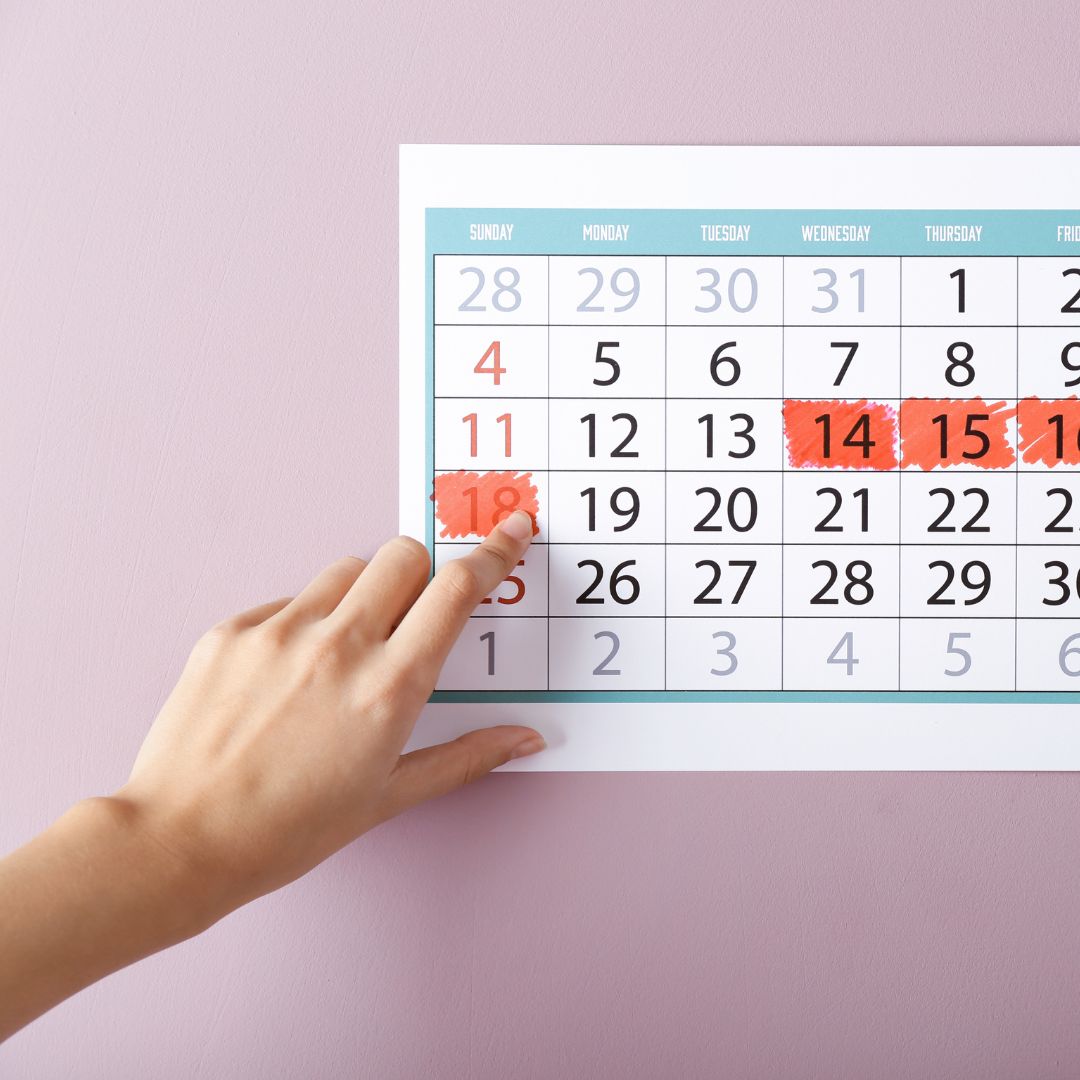
No, not at all. Because what sounds very simple in theory is different from woman to woman in practice and can even vary slightly from month to month. In the model cycle, a duration of 28 days is assumed. In fact, most women have a cycle of 27 days, but a length of 25 - 35 days is also classified as “normal”. 5% of women even have a cycle longer than 35 days. You can already tell that nothing can be generalized here. Even fluctuations in cycle length within a year are completely normal, in about 60% of women this is more than a week. You should become alert if your menstruation regularly lasts longer than 5 - 7 days. In this case, it is called menorrhagia.
Good to know: The duration of the individual phases is very individual. Therefore, the blanket determination of fertile and infertile days is quite dangerous and should not serve as a method of contraception.
1.5 shots of schnapps per week
This is not a recommendation to drink alcohol. This is the average amount of blood that a menstruating person loses during menstruation, a total of approximately 60 ml. This amount does not flow continuously - on some days, usually at the beginning, the bleeding is heavier, towards the end it usually decreases, and the time of day also influences the bleeding strength.
It becomes problematic when the menstruating person regularly loses more than 80 ml of blood in total. Then it is medically referred to as hypermenorrhea (also English: Heavy bleeding). In this condition, the body loses a lot of blood and with the blood, iron. An iron deficiency develops. In case of iron deficiency, it can lead to a lack of red blood cells, a so-called iron deficiency anemia. This results in an under-supply of oxygen to the tissues, resulting in fatigue, weakness, paleness, cold hands and feet, and in very severe anemia even shortness of breath and heart palpitations.
Checklist “Do I have too heavy a period?”
(The following symptoms may indicate hypermenorrhea):

Heavy bleeding and pain
In addition to the increased blood loss, which can already be unpleasant enough due to the frequent changing of menstrual products, the constant worry of “leaking”, and the accompanying symptoms such as circulatory disorders, hypermenorrhea is often accompanied by severe pain and cramps in the lower abdomen. This can have various causes.
In some menstruating people, very heavy bleeding has been present since puberty. In others, however, it can be a sign of benign changes in the uterine lining (polyps or myomas), be associated with the use of an IUD, or be caused by hormonal fluctuations. Endometriosis is often accompanied by heavy bleeding and very severe pain.
Estrogen dominance, such as that caused by the use of the birth control pill, can also lead to unnaturally heavy and very painful menstrual bleeding (what else can lead to estrogen dominance and how you can avoid it, we have summarized for you in an earlier article ).
No, no, and once again no!
So, no, a “normal” menstruation should not be accompanied by severe period pain, and the bleeding should not be unnaturally heavy either! If you feel that your period pain, the amount of blood, or the duration of bleeding is unnatural, then do not hesitate to have this checked by a doctor and do not let yourself be brushed off. Some of the causes require medical intervention. Others, such as estrogen dominance, you can treat yourself in the long term by, for example, stopping the pill, paying attention to endocrine disruptors in cosmetics and consumer products, eating healthily, avoiding cigarettes and alcohol, and making sure to have a physically active daily life. Also strengthening your liver function can be helpful in breaking down too much estrogen. But you should definitely have this checked, as the causes are varied and each requires a different therapy.
Quick help for severe period pain:
- Heat: a hot water bottle, a cherry pit pillow, or a warm bath help to relieve cramps in the uterus
- Tea: many medicinal herbs such as chamomile, lady's mantle, or sage have cramp-relieving effects. Yarrow can even lead to a reduction in bleeding. Nettle supports blood formation.
- CBD: many women find CBD drops helpful with their cramp-relieving and calming effect
- Rest: Stress (which also includes pain) amplifies the symptoms. There is little reason not to take a break. In some countries, special menstrual leave days are now even being introduced.
- Massage: Massages can also have a cramp-relieving effect, especially when performed with calming oils such as chamomile or lavender.
- Acupressure: Various pressure points can relieve pain and even regulate the bleeding strength. Self-help apps such as the Luna app help you relieve your symptoms with instructions on acupressure
- Avoiding alcohol and cigarettes: Toxins stress the body, the liver, and additionally throw the hormone balance out of whack.
- Magnesium-rich foods: Magnesium helps against cramps and is found in many plant-based foods such as nuts, whole grains, seeds, and - as athletes know - bananas.
- Transcutaneous electrical nerve stimulation: TENS devices are attached with electrodes to the lower abdomen and thus temporarily prevent the transmission of pain signals to the brain.
- Sex: Yes, even during menstruation, because orgasm causes the release of the body's own painkillers (endorphins) and has a cramp-relieving effect. Of course, only if you feel comfortable with it and the symptoms are not too severe.
- If nothing else works: cramp-relieving pain tablets. Here you will receive expert advice at the pharmacy.